+44 20 7903 7116


 +44 20 7903 7116

With time the face changes because of ageing, genetics, sun exposure, smoking and weight changes; lines, sagging and loss of definition can make some people look older than they feel, and some feel self-conscious about it.
Aram Clinic organises facelift in Turkey with partner surgeons.
A facelift lifts sagging tissue and removes excess skin of the lower face and neck; it does not remove wrinkles or sun damage, it does not stop ageing, and it should be chosen for the right problem and the right face.
Aram Clinic invites you to request a free quote.
Facelift is one of the cosmetic operations performed in Turkey; it is a major operation, not a simple one, and it is sought by both women and men.
Aram Clinic says it offers an all-inclusive package to simplify the price; compare it with written quotes.
According to the clinic, its all-inclusive package contains the following; ask for the exact list of inclusions and exclusions:
- The medical fees (doctor and medication).
- Transportation.
- A hotel room.
The clinic says it works with experienced surgeons and nurses; no clinic can guarantee that you will be satisfied with the result, so ask for the surgeon’s name, experience and results.
What is facelift surgery ?
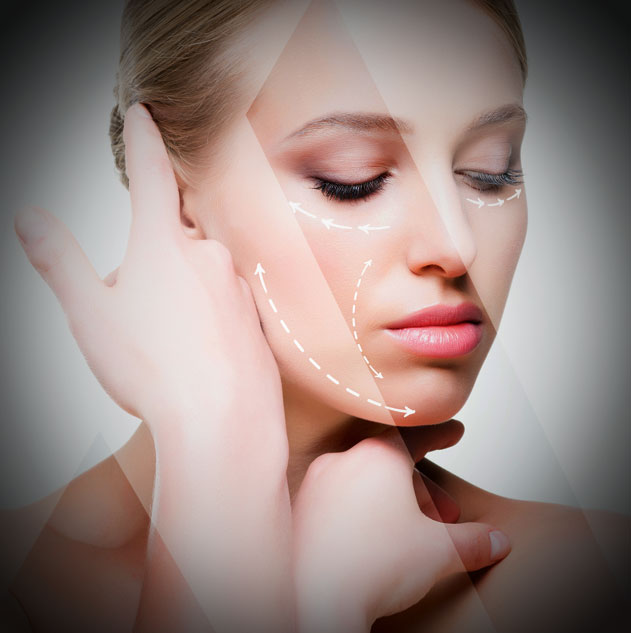
A facelift is a cosmetic operation that lifts and tightens the tissues of the lower face and neck and removes excess skin, in order to reduce the signs of ageing, jowls and folds; it also defines the jawline and cheeks and, with liposuction, can reduce excess fat under the chin. It is performed for cosmetic purposes, for women and men, and it does not remove wrinkles.
What are the types of facelift ?
Mini facelift
This technique is suited to patients with a slight degree of sagging; it does not remove age lines.
In this process, the surgeon tightens the deep skin tissues through small incisions in the
hairline area above the ear, or in the light creases surrounding the ear.
Through these incisions, the tissue around the cheeks is lifted and the jawline refined, to reduce the appearance of tired, sagging skin.
Traditional facelift.
This procedure is more extensive than the previous one and can give a bigger and longer-lasting result in the right patient, with a longer recovery.
The surgeon makes relatively long incisions behind the hairline and the front of the ear and
hides them between the natural folds of the skin.
It lifts and repositions the deeper tissues and removes excess skin of the face and neck.
What is a facelift in Turkey and who is it for?
A facelift in Turkey, medically called rhytidectomy, is an operation carried out by a plastic surgeon in a Turkish hospital to lift and tighten the sagging tissues of the lower face and neck, remove excess skin and restore a firmer, more defined jawline and cheek contour, so that the face looks younger and more rested. In a typical facelift, the surgeon makes incisions in the hairline at the temple, in front of and behind the ear and, often, under the chin; lifts and repositions the deeper layer of the face (the SMAS or, in the deep plane technique, the deeper ligaments and fat compartments); removes the excess skin and redrapes the rest. The operation is done under general anaesthesia (or deep sedation), takes about two to six hours depending on the extent, and means one night in hospital. Aram Clinic says it offers facelift in Turkey with partner surgeons, in an all-inclusive package covering the medical fees (doctor and medication), transportation and a hotel room, at a price lower than in other countries; these are the clinic’s own descriptions and should be verified in writing.
A facelift is for adults, women and men, who are bothered by sagging cheeks, jowls, a blurred jawline and loose neck skin, and who are healthy, do not smoke and have realistic expectations. It repositions tissue and removes loose skin; it does not stop ageing, remove fine wrinkles, correct sun damage or change who you are. Many people who think that they need a facelift need a combination of treatments, and some need a different operation, such as an endoscopic brow and mid-face lift, eyelid surgery or a neck lift.
This page answers the questions people ask most: what a facelift can and cannot do, how the types differ (mini, SMAS, deep plane, full facelift with neck lift), what the marketing names “one-stitch”, “ponytail”, “3D” and “vampire” mean, who is a candidate, how the operation and the recovery work, what the scars and the results look like and how long they last, what the risks are, how much a facelift costs in Turkey compared with the UK, what a package includes, whether it is safe, how to choose a surgeon, how to read before-and-after photographs and reviews, how long to stay and what to check before you book. It draws on guidance from the NHS, the British Association of Aesthetic Plastic Surgeons, the American Society of Plastic Surgeons and the International Society of Aesthetic Plastic Surgery, and on information supplied by Aram Clinic. It is general information, not medical advice: a surgeon must examine you before any operation.
Aram Clinic also publishes a guide to the endoscopic facelift (brow and mid-face), and guides to eyelid surgery, rhinoplasty, genioplasty, chin augmentation and hyaluronic acid fillers. For a personal estimate, use the free express quote.
What are the key facts about a facelift in Turkey at a glance?
| Question | Short answer |
|---|---|
| What does it lift? | Cheeks, jowls, jawline and (with a neck lift) the neck. |
| What does it not treat? | Fine wrinkles, sun damage, skin texture, brow droop, eyelid skin. |
| Incisions | Temple hairline, around the ear, behind the ear; sometimes under the chin. |
| Operation time | About 2 to 6 hours depending on the type and the combination. |
| Anaesthesia | General anaesthesia, or deep sedation. |
| Hospital stay | Usually 1 night; drains in some cases. |
| Stitches | Removed at about 5 to 10 days. |
| Bruising and swelling | Bruising 2 to 3 weeks; swelling for weeks to months. |
| Return to social life | About 2 to 3 weeks. |
| Final result | Judged at about 3 to 6 months. |
| Time to plan in Turkey | About 10 to 14 days. |
| Longevity | Often about 8 to 12 years of improvement; the face keeps ageing. |
| Main risks | Haematoma, nerve injury, skin loss in smokers, visible scars, hair loss, asymmetry. |
| Insurance | Cosmetic; not covered by public systems; check travel insurance. |
These are typical ranges, not promises: your skin, your face and your healing decide the result. A mini facelift and a deep plane facelift with a neck lift are very different operations.
If you remember only one thing: choose the operation for your face, not the name on a menu, and choose the surgeon before the clinic.
What can a facelift do and what can it not do?
A facelift repositions the tissues of the lower two thirds of the face and the neck and removes the excess skin, so that the cheeks are fuller and higher, the jowls are reduced, the jawline is cleaner and the neck is tighter. It can take years off the look of a face and, done well, gives a natural rather than a “pulled” result. It can also remove excess fat under the chin by liposuction, and tighten neck bands, when a neck lift is included. A facelift is not only for women: men have facelifts in growing numbers, with some technical differences, such as beard-bearing skin and the position of the hairline.
What a facelift does not do: it does not erase wrinkles or fine lines, which are a matter of skin quality and need resurfacing, injectables or skin care; it does not remove sun damage or pigmentation; it does not lift the brows or treat heavy upper eyelids, which need a brow lift or eyelid surgery; it does not change the shape of the nose or chin; and it does not stop the face from ageing afterwards. A facelift is therefore not a wrinkle treatment: the lift is deeper than wrinkles, and many patients need a combination of treatments. See the guide to eyelid surgery in Turkey and the endoscopic facelift page for the upper face.
Ask the surgeon to show on your face what the facelift will change and what it will not.
Bring a photograph of your face from ten or fifteen years ago.
What are the types of facelift: mini, SMAS, deep plane and full facelift with neck lift?
| Type | How it works | Best for | Notes |
|---|---|---|---|
| Mini facelift | Shorter incisions in front of and around the ear; limited lift of cheeks and jowls. | Early sagging in people in their forties or early fifties. | Shorter recovery and scars; shorter-lived; limited neck effect. |
| SMAS facelift | The SMAS layer is tightened or folded and the skin is redraped. | Moderate sagging of cheeks and jowls. | The most widely used; good, natural results in experienced hands. |
| Deep plane facelift | The deeper tissues are released and lifted as one unit, with the ligaments. | Moderate to severe sagging, deep folds, heavier faces; second facelifts. | More technical and longer; may give a more durable and natural result; higher risk of nerve injury if done by inexperienced surgeons. |
| Full facelift with neck lift | Extended incisions around the ear and under the chin; neck muscles tightened. | Jowls and a loose neck together. | The most complete lower-face operation; longer recovery. |
| Mid-face lift | Focus on cheeks and under the eyes. | Early cheek descent; hollows. | Often endoscopic; see the endoscopic facelift page. |
| Thread lift | Threads placed under the skin. | Mild sagging; no surgery. | Modest, shorter-lived effect; see the alternatives section. |
The names matter less than what is done to the deep layer. A “mini facelift” is a smaller operation, not a lighter version of a deep plane lift: it suits earlier ageing, gives a smaller result and has shorter scars and recovery. In a SMAS facelift, the layer beneath the skin is tightened or plicated; in a deep plane facelift, the surgeon works beneath that layer, releasing and lifting the cheek fat and the supporting ligaments so that the tissue moves as one, which many surgeons consider more natural and longer-lasting for moderate to severe ageing, but which demands specific training. Searches such as “deep plane facelift Turkey” (the most frequent), “SMAS facelift Turkey” and “mini facelift Turkey” show that patients compare techniques, and the right answer depends on your face, not on a brand.
Ask which technique is proposed for you, why, and how many of those the surgeon performs each year.
Mid-face lift.
This process focuses on the cheeks and around the eyes, the doctor makes incisions similar to the wounds of the traditional operation, but they are a little deeper in order to reach the muscles that the traditional surgery does not reach.
Lower facelift.
It targets the corners of the mouth, the area between the
mouth and nose, as well as the
jaw.
This technique is suitable for patients of all ages who are looking for a way to get rid of
signs of aging and sagging.
Forehead lift operation
This procedure targets the forehead area in particular, as
it has many wrinkles and is very
popular with both men and women.
A forehead lift can be performed in several ways: an endoscopic lift through small scalp incisions (see the endoscopic facelift guide), an open (coronal) lift through a longer scalp incision, a hairline lift, or a thread lift; chemical (peel) and injectable treatments soften forehead lines but do not lift.
Thread face lift
It is a minimally invasive alternative to traditional operations, in which threads are placed under the skin through tiny entry points to lift the tissues slightly; it can be done under local anaesthesia, and it leaves tiny marks, but the lift is modest and shorter-lived, and threads can cause complications such as dimpling, migration and infection.
What do “one-stitch”, “ponytail”, “3D”, “vampire” and “gold thread” facelifts mean?
Marketing names for facelifts and related treatments are common, and the searches show how much confusion they cause. A “one-stitch facelift” or “single-stitch lift” is a minimally invasive lift in which a thread or suture is passed through small incisions to lift the cheeks and jowls; it is a form of suture suspension that gives a mild lift and is not equivalent to a surgical facelift; results are modest and shorter-lived, and any technique that is promoted as “facelift in one stitch” should be examined with scepticism. A “ponytail facelift” is a name for a lift that uses incisions in the scalp and hairline and aims at a lift of the temples and brows, or a high mid-face tightening; there is no standard definition, and it should be explained on your own face. A “3D facelift” usually refers to a facelift combined with volume restoration by fat or fillers, to address both sagging and loss of volume, which is a sensible concept but not a single technique. A “vampire facelift” is a treatment in which platelet-rich plasma from your own blood is injected or applied with microneedling to improve skin quality; it is not a facelift, it does not lift, and its benefit is modest and variable. “Gold thread” lifts use threads, sometimes with gold, to tighten the skin; the evidence is limited and complications such as migration, infection and nodules occur.
A good surgeon will translate marketing names into what is actually done to your tissues, and will tell you honestly what to expect.
If a clinic quotes a “named” facelift, ask for a description of the incisions, the layers lifted and the expected duration of the result.
Be wary of any promise that a small procedure gives the result of a surgical facelift.
Who is a good candidate for a facelift and when is the right time?
A good candidate is a healthy adult, typically in the forties, fifties or sixties, with sagging cheeks, jowls and neck, whose skin still has some elasticity and whose facial bone structure is reasonably strong, who does not smoke, who has a stable weight and who has realistic expectations. There is no right age: the decision depends on the signs of ageing and on how bothered you are. Before the operation, the doctor holds a consultation to make sure that you do not have a disease that prevents the operation, and discusses the reasons that led you to want it, which is a good moment to explain what you hope to change. Men, whose skin is thicker and whose facial blood supply is richer, can have excellent results, with a slightly higher risk of bleeding under the skin, which is why blood pressure control matters.
A facelift is postponed or avoided in people who smoke (smoking harms the blood supply of the skin flaps and can cause skin loss), in those with uncontrolled medical conditions such as high blood pressure or diabetes, bleeding or clotting disorders, those on blood thinners that cannot be adjusted, in those with unrealistic expectations or distress about appearance, and in those who expect it to remove wrinkles. A surgeon should tell you honestly if a different operation or a non-surgical approach would suit you better.
Tell the surgeon about blood pressure, medicines, smoking and previous facial surgery, fillers or threads.
If you are in your thirties and bothered by early signs, ask about less invasive options first.
How much does a facelift cost in Turkey compared with the UK and the US?
The price of a facelift in Turkey depends on the type (mini, SMAS, deep plane, with or without a neck lift), the combination with other procedures such as eyelid surgery or fat transfer, the surgeon and hospital, the anaesthesia, the length of stay and what the package includes. In general, quotes in Turkey are lower than in the UK, the US, Canada, Australia and many European countries for private patients, which explains searches such as “facelift Turkey cost”, “facelift Turkey price”, “deep plane facelift Turkey cost”, “mini facelift Turkey price”, “how much is a facelift in Turkey” and “cost of facelift in Turkey vs UK”. Aram Clinic states that its all-inclusive package, which covers the medical fees (the doctor and the medication), transportation and a hotel room, allows a facelift in Turkey at a price lower than in other countries; the real difference depends on what you compare, so check the claim against written quotes and a quote from a surgeon at home. Descriptions such as “the best package deal” and “the best medical team in all of Turkey” cannot be verified.
Compare like with like: the same type of facelift (a mini lift is not a deep plane lift), the same neck work, the same hospital stay and anaesthesia and the same terms for a revision. A very low price may reflect a smaller operation than the one you imagine, a less experienced surgeon, a rushed assessment or fewer nights of monitoring. A facelift is a visible operation whose result cannot easily be undone, so price should not be the first criterion.
What should a written facelift quote include?
Operation : type of facelift (mini, SMAS, deep plane), neck lift, liposuction, combined procedures.
Surgeon and hospital : names, specialty and licence.
Assessment : consultation, photographs, blood tests.
Anaesthesia and stay : general anaesthesia or sedation, nights in hospital.
Medicines and aftercare : antibiotics, painkillers, dressings, drains, check-ups.
Follow-up : checks in Turkey and remote follow-up.
Travel services : transfers, hotel nights, interpreter.
Revision : terms and who pays.
Payment terms : deposit, refund conditions, currency.
Aram Clinic does not publish fixed prices on this page because the cost depends on your case: request a free express quote with photographs of your face from the front and the sides.
What is included in a facelift package and is a facelift in Turkey safe?
According to Aram Clinic, its all-inclusive package contains the medical fees (doctor and medication), transportation and a hotel room. A complete facelift package may also include the consultation and tests, the operation, anaesthesia, the hospital stay, dressings, medicines, transfers, an interpreter or coordinator and follow-up. “All-inclusive” has no legal definition, so ask for the list in writing and check what is excluded: combined procedures, extra nights, treatment of complications or revision, and the companion’s costs.
Is a facelift in Turkey safe? It can be, when performed by an experienced plastic surgeon in a licensed hospital on a suitable patient, with a proper assessment, anaesthesia with monitoring and follow-up. Searches such as “is it safe to get a facelift in Turkey” and “is a mini facelift safe in Turkey” reflect real worries. Safety depends on the patient’s health, the surgeon’s training and experience with the specific technique (a deep plane facelift is technically demanding, and requires specific training), the hospital and the aftercare, not on the country. A facelift is not a “simple and highly efficient” operation, as sometimes described: it is a major operation with real risks. Be wary of any clinic that calls it simple, that proposes the same lift to everyone or that quotes without seeing photographs.
Ask how many of the proposed facelifts the surgeon performs each year and what their training is.
Be wary of promises that the surgeons “will not rest until you are fully satisfied”: no clinic can guarantee your satisfaction.
How do I prepare for a facelift and what tests are needed?
Before the operation, you meet the surgeon for a consultation to make sure that you do not have any disease that prevents surgery and to understand why you want the operation. The surgeon examines your face sitting and in movement, your skin, your hairline and neck, takes photographs and explains the technique and the scars. Some tests are performed: a complete blood count, blood chemistry, coagulation tests and, depending on your age and health, a chest X-ray and an electrocardiogram. High blood pressure must be controlled, since it raises the risk of bleeding under the skin after surgery. You will be asked to stop smoking and all nicotine products well before and after surgery (many surgeons ask for at least four to six weeks), to avoid aspirin, ibuprofen and other anti-inflammatory drugs, vitamin E, fish oil and herbal supplements that increase bleeding, usually for one to two weeks beforehand, to avoid alcohol for at least 48 hours, and to fast as the anaesthetist instructs (usually six to eight hours for food).
Plan a companion, a quiet place to rest with your head raised, loose front-opening tops (nothing that goes over the head), cold packs and time off work. Send recent photographs of your face from the front and the sides in advance so that the surgeon can give a first opinion before you travel.
Ask for the consent form in English to read at home.
Tell the surgeon about any fillers, threads, laser treatments or previous facial surgery.
How to prepare fo facelift operation ?
Before undergoing the face-lift operation, the doctor will conduct a pre-consultation session with you to ensure that you do not have any diseases that may prevent you from performing the operation and also clarifies the reasons that prompted you to perform it.
Some of the tests that will be performed are :
- complete blood count.
- Blood chemistry test.
- A prior chest X-ray.
- electrocardiogram (ECG).
You should not drink alcohol for at least 48 hours before the operation, and should fast as the anaesthetist instructs (usually six to eight hours before the operation).
What happens during the facelift surgery ?
There are many techniques to the
facelift operation; your doctor will choose which one is
best suited for you based on your condition, the amount of muscle and fat that you have and
your preferences.
The doctor will start by making an incision in the skin in the lower chin area, often on the
jawline, to remove the skin in the neck and then lift it up, exposing the underlying muscle
tissue.
The surgeon tightens the muscle, then removes the remaining skin and fat and puts the skin
back in its new location.
Usually, other incisions are made in the front and back of the ears, and the same process is
repeated in each area individually, according to the amount of skin that you have and the
degree of tightening required.
The doctor will finish the procedure by covering your face with an elastic bandage, the
surgeon sometimes leaves a drainage tube or several tubes to drain the remaining fluid and
blood from the tissues.
The whole operation takes from about 2 to 4 hours for a standard facelift, and longer for a deep plane lift or combined procedures.
What happens after facelift surgery ?
After the surgery, you stay in hospital for about 24 hours so that the team can check that your condition is stable.
You should also refrain from stretching or bending your neck and the use of facial muscles
in the first days after the operation.
During the first days you will have swelling and bruising, which fade over about two to three weeks; a rapidly swelling, tense side of the face is not normal and needs urgent attention.
During this time the elastic bandage is removed, and you will be socially presentable at about two to three weeks.
There are many factors that can influence the results of the face-lift operation, which
includes your age, skin thickness, skin type, and its elasticity, and the pace of recovery
varies from person to person, and the final result of the face-lift operation is often seen
after several weeks and even months of the operation.
What are the risks of facelift surgery ?
Before deciding on undergoing the
facelift surgery, there are some risks that you need to be
aware of.
A facelift can give very good results in experienced hands, but, as with any other cosmetic or medical operation, there is a real chance of complications, and some of them are not rare.
How is a facelift performed, step by step?
| Step | What happens | Typical timing |
|---|---|---|
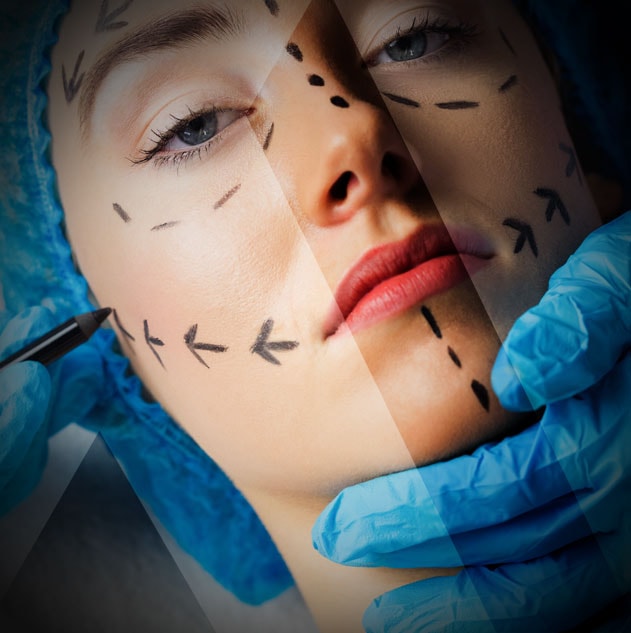
| 1. Marking and anaesthesia | The surgeon marks the incisions with you seated; general anaesthesia is given. | 30 to 45 minutes. |
| 2. Neck and chin (if included) | A small incision under the chin; liposuction of fat under the chin; the neck muscles are tightened. | 30 to 60 minutes. |
| 3. Incisions | In the temple hairline, in front of the ear, around the earlobe and behind the ear. | 15 to 30 minutes. |
| 4. Lifting the deep layer | The SMAS is tightened or the deep plane is released and lifted, repositioning cheeks, jowls and the neck. | 60 to 120 minutes. |
| 5. Skin | The skin is redraped, the excess removed and the incisions closed in layers. | 30 to 60 minutes. |
| 6. Drains and dressing | A drain may be placed and a light elastic bandage applied. | 15 to 30 minutes. |
There are many facelift techniques, and your surgeon chooses the one that best suits your condition, the amount of muscle and fat and your preferences. In a typical operation, the surgeon begins with an incision under the chin, to remove excess fat by liposuction and to tighten the neck muscles, and then makes the incisions in the temple hairline, in front of and behind the ear, hiding them in natural folds as far as possible. The deeper tissue layer is tightened or released and lifted, and only then is the skin redraped and the excess removed, since tightening the skin alone gives an unnatural, short-lived result. The surgeon finishes by closing the incisions and covering the face with an elastic bandage, and sometimes leaves a drain to remove fluid and blood. The whole operation takes two to four hours for a standard facelift, and longer, up to six hours, for a deep plane lift with a neck lift and other procedures.
Ask which layer is lifted, where the incisions will be and whether drains will be used.
Ask for the operative report to keep for future doctors.
What is the recovery after a facelift, day by day?
| Time | What to expect | What to do |
|---|---|---|
| Days 0 to 3 | Hospital for one night; elastic bandage; drains in some cases; swelling and bruising of the face and neck; tightness; headache. | Head raised; cold compresses as advised; no stretching or bending of the neck; no strenuous effort. |
| Days 4 to 10 | Swelling and bruising peak then fade; bandage and drains removed; stitches removed from about day 5 to 10; numbness of the skin. | Avoid heat, bending and lifting; gentle hair care; no sun. |
| Weeks 2 to 3 | Bruising yellowing; swelling persists; return to social life for most people; tightness of the neck. | Make-up as advised; avoid strenuous exercise. |
| Weeks 3 to 6 | Swelling settles; sensation returns gradually. | Gradual return to exercise when cleared. |
| Months 3 to 6 | The final result can be judged; scars soften. | Review with the surgeon; scar and sun care. |
| Months 6 to 12 | Scars fade; sensation largely returns. | Sun protection and skin care. |
After the operation, you stay in hospital for about twenty-four hours, so that the team can check that you are stable. You should not stretch or bend your neck or use the muscles of your face excessively in the first days. You will have bleeding that is minor and swelling and bruising that decline over a couple of weeks; the elastic bandage is removed after the first days; and you can consider yourself socially presentable at about two to three weeks, and not within ten days as sometimes said. Many factors influence the result of a facelift, including your age, skin thickness and type, elasticity and the pace of your healing, which differs from person to person, and the final result is generally judged after several weeks and even months. Numbness of the cheeks, the ears and the neck is common and improves over weeks to months; a feeling of tightness of the neck is normal at first.
Call your surgeon or seek care if you have a rapidly swelling or very tense side of the face, increasing pain, fever, pus or any change in vision.
Plan to be out of the public eye for about two to three weeks.
What results and scars can I expect and how long does a facelift last?
A well-planned facelift gives a more defined jawline, a smoother neck and fuller, higher cheeks, with a natural, rested look. The first weeks show swelling and tightness; the final result is judged at three to six months. The improvement typically lasts for years, commonly about eight to twelve years, although the face continues to age at its own pace, and many patients look younger than they would have, rather than frozen at the age of the operation. A deep plane lift may last longer than a mini lift. Results depend on skin quality, genetics, weight changes, sun and smoking.
The scars are permanent, but are designed to be hidden: in the temple hairline, in the natural crease in front of the ear (or just inside the cartilage of the tragus), around the earlobe and behind the ear in the hairline, with a small scar under the chin if a neck lift is included. In most patients they fade to fine pale lines and are hard to see; in some they are wider, red or raised, and they can pull the sideburn or the hairline, or distort the earlobe (“pixie ear”) if the skin is under tension. Searches such as “mini facelift scars Turkey” and “how to minimise facelift scarring” show that scars worry people: ask to see the surgeon’s own results, from the front and the side, with hair tied back.
Take photographs of your face at one week, one month, three months and six months.
Protect scars from the sun for a year, and do not smoke.
Some of the risks of facelift surgery are :
- Infection in the wound.
- bleeding.
- Scars at the incision site.
- Problems with blood pressure and heart rhythm related to anaesthesia, and blood clots.
- Injury to a facial nerve (usually temporary), numbness, and a collection of blood under the skin (haematoma), which needs urgent treatment.
- Facial swelling.
- Asymmetrical facial features.
- Hair loss.
What should I remember about a facelift?
Many people want to look as rested as they feel, and a facelift is one way to reduce the signs of ageing in the lower face and neck.
It is a major operation with permanent scars and real risks, it does not remove wrinkles and it does not stop ageing; ask which technique is proposed and why, who will operate, what the risks are for you, what the revision policy is and who will follow you, in writing, before you decide; Aram Clinic invites you to request a free quote.

What are the risks of a facelift and which signs are urgent?
Before deciding on a facelift, you should know the risks, which are not very rare and which are higher in smokers and in people with high blood pressure. The most frequent serious complication is a haematoma, a collection of blood under the skin, in a small percentage of patients, which needs urgent treatment, often by returning to the operating room; it is more common in men and in people with high blood pressure. Other risks include infection of the wound; scars that are wide, raised or visible, or that distort the hairline or the earlobe; injury to a facial nerve, which usually causes temporary weakness of part of the face that recovers over weeks to months, and is permanent only rarely; numbness of the skin, which is common and usually temporary; skin loss at the edge of the incision, more frequently in smokers; hair loss around the incisions; asymmetry; contour irregularities; swelling that lasts; blood clots; and complications of anaesthesia, which can include problems with blood pressure, heart rhythm and breathing, particularly in older patients or those with heart disease. The description of a “severe drop in blood pressure” as a specific risk of a facelift is therefore a general anaesthetic risk, which the anaesthetist monitors.
Rapid swelling or tension of one side of the face or neck : possible haematoma: contact your surgeon or go to emergency care immediately.
Fever, spreading redness, pus or increasing pain : possible infection: contact your surgeon and seek care.
Skin that turns dark, blistered or breaks down : possible loss of blood supply: contact your surgeon urgently.
Weakness of the smile or the eyebrow that does not improve : tell your surgeon.
Difficulty breathing or swallowing : emergency: call emergency services.
Calf pain, swelling or sudden shortness of breath : emergency: possible clot.
You can reduce risks by choosing an experienced surgeon, controlling your blood pressure, stopping smoking, following the aftercare and attending check-ups.
If you develop a symptom after you return home, treat it as urgent: go to a hospital, tell them you had a facelift abroad and show your operative report, and contact the surgeon as well.
How do I find the best facelift surgeon in Turkey and what should I ask?
| What to check | Why it matters | How to verify |
|---|---|---|
| Training and facelift volume | Facelift technique needs specific experience; deep plane in particular. | Name, plastic surgery specialty, registration, number of facelifts and of the proposed technique per year. |
| Photographs of their own results | Results vary between surgeons. | Cases like yours at 6 to 12 months or more, from the front and the side, with scars visible. |
| Operation matched to your face | The wrong operation causes disappointment. | Written explanation of why mini, SMAS or deep plane. |
| Hospital licence and monitoring | Surgery needs a proper facility. | Licence from the Turkish Ministry of Health; anaesthetist identified. |
| Blood pressure and smoking policy | They affect haematoma and skin loss. | The surgeon asks about both and sets conditions. |
| Aftercare and revision terms | Problems appear after you return. | Written plan, contact available, revision terms. |
| Honest advice | Some patients need a different operation or no operation. | The surgeon discusses alternatives and declines unsuitable cases. |
Searches such as “best facelift surgeon in Turkey”, “best deep plane facelift surgeon in Turkey”, “trusted facelift surgeon Turkey for UK patients” and “facelift Ankara Turkey” are frequent, and so are the marketing answers: there is no reliable public ranking of Turkish surgeons, and many “top 10” lists are written or sponsored by clinics or agencies. Compare at least two surgeons, ask for a video consultation with the surgeon who will operate and seek a second opinion from a plastic surgeon at home. Aram Clinic says it works with experienced Turkish plastic surgeons: ask for the surgeon and the hospital by name in writing and verify them yourself.
A surgeon who tells you honestly which operation your face needs, shows you results with scars and tells you about the risks is more trustworthy than one who promises the face you always wanted.
How should I read facelift before-and-after photographs and reviews from Turkey?
Facelift photographs are among the easiest to manipulate. Pictures taken in the first weeks show swelling and bruising, not the result; later photographs are selected; lighting, angle, hair, make-up, expression and filters change the apparent jawline and neck dramatically; and many images belong to other patients or to people who also had fillers, fat transfer or laser. The scars are rarely shown. Reviews can be solicited or paid for, and patients with complications may not post. Searches such as “facelift Turkey before and after”, “deep plane facelift Turkey before and after”, “mini facelift Turkey before and after” and “facelift in Turkey reviews” are among the most frequent, and marketing is aimed at them.
To judge usefully, ask the surgeon for a series of cases like yours at six to twelve months or more, in the same pose and light, without filters, from the front, the side and three-quarter views, with the scars and the hairline visible, and for contact with previous patients with their consent. Look for accounts that mention recovery, numbness, scars and the length of results. A second opinion from a surgeon at home on your photographs is more informative than any gallery.
Treat marketing images as advertising.
Remember that every face and every skin type heals differently.
Can a facelift be combined with eyelid surgery, a neck lift, fat transfer, a nose or chin procedure?
Yes, and combinations are common. A facelift is often combined with eyelid surgery (blepharoplasty), since it does not treat the eyelids; with a brow or endoscopic mid-face lift (see the endoscopic facelift guide), since it does not treat the upper face; with fat transfer to restore volume lost in the cheeks and temples; with laser or chemical resurfacing for skin quality; with rhinoplasty; and with genioplasty or a chin implant, which can improve the jawline and the profile. The advantages are one anaesthetic and one recovery, and a harmonised result. The disadvantages are a longer operation, more swelling and a higher risk of complications as the duration increases, and, particularly in smokers or those with high blood pressure, a higher risk of skin and healing problems. A responsible surgeon limits the length of the operation, may stage the procedures and explains the reasoning.
Ask the surgeon what each part of a combined plan contributes and whether it could be done in stages, and be wary of packages that bundle many procedures to fit a short stay.
Combined operations lengthen the stay before you can fly.
Do not combine procedures just to use up a package.
Are non-surgical treatments an alternative to a facelift?
| Option | What it does | Lasts | Limits |
|---|---|---|---|
| Facelift | Lifts deep tissue and removes excess skin. | Many years. | Surgery; scars; recovery. |
| Thread lift | Threads lift tissue slightly. | About 1 to 2 years. | Modest effect; risks such as dimpling, migration, infection; limited evidence. |
| Hyaluronic acid fillers | Restore volume (cheeks, temples). | About 9 to 18 months. | Volume, not lift; can look overfilled; see the filler guide. |
| Botulinum toxin | Relaxes muscles; softens lines. | 3 to 4 months. | Temporary; does not reposition tissue. |
| Radiofrequency, HIFU, laser | Tighten mild laxity and improve skin. | Months to years. | Modest effect; does not remove excess skin. |
| Platelet-rich plasma (“vampire facelift”) | May improve skin quality. | Months. | Not a lift; modest evidence. |
| Mini facelift | Smaller surgical lift. | Several years. | Limited neck effect; see the types table. |
Non-surgical treatments do not replace a facelift: they improve volume or skin quality or give a small lift for a limited time. They suit people in their thirties and early forties, those who want to delay surgery or those who do not want an operation. Many people use them in combination with a facelift, to maintain and refine the result. See the guide to hyaluronic acid fillers in Turkey.
A good surgeon will propose the least invasive treatment that gives the result you want, and will say so when surgery is not needed.
How long should I stay in Turkey for a facelift and when can I fly home?
Plan about ten to fourteen days in Turkey: the consultation and tests, the operation, one night in hospital, a check the next day, the removal of the dressing and drains, the removal of the stitches at around day five to ten and a final check before you leave. Combined procedures and a deep plane lift with a neck lift need the longer stay. The surgeon decides when you can fly, usually when the dressing is off, swelling is stable, the wounds are healing, the stitches are out and there is no sign of a haematoma, infection or other problem; many surgeons advise waiting at least seven to ten days, because a haematoma, if it develops, usually does so in the first days, and because you want to be able to see your surgeon if it does. There is no special restriction on flying after a facelift, but the cabin air is dry, your face is swollen and bruised, and you should keep your head raised and avoid straining. Flights to Istanbul take about three and a half to four hours from the UK and Western Europe and around nine to eleven hours from the US East Coast. Check the current visa or e-visa requirements for Turkey on the official government sites before you book, and make sure your passport is valid for the whole stay.
Take a companion, wear loose front-opening clothes, a hat and sunglasses, and arrange to avoid sun, heat and crowded places in the first weeks.
When you arrive home, arrange to see a doctor or a surgeon within the first week or two if you have any concern, and bring the operative report.
Do not book a non-refundable flight before the surgeon has confirmed the date.
What are the downsides of having a facelift abroad and does insurance cover it?
The main limits concern follow-up. If you develop a haematoma, an infection, a wound problem, a weak eyebrow or an asymmetry in the first weeks after you land, your local doctors will have to deal with it, and some are reluctant to take responsibility for an operation done elsewhere. A revision of scars or of a result that is not what you hoped for usually has to wait at least six to twelve months and may mean another trip or paying for surgery at home. A journey soon after facial surgery is tiring, with the swelling and bruising at their peak, and complications abroad are stressful and expensive. Legal recourse is more complicated across borders, and language and documentation differences can create misunderstandings.
A cosmetic facelift is not covered by public health systems or most insurance, and does not cover treatment abroad; travel insurance usually excludes planned cosmetic surgery and its complications, so a specialist policy is needed, and you must read the exclusions. In the UK, the NHS provides emergency and necessary care but does not usually fund cosmetic revisions, and some private surgeons are reluctant to treat complications from surgery done abroad or charge for it. Before you travel, ask the clinic in writing what happens if you need a revision: who performs it, where, how much you pay and whether travel is covered.
Identify a surgeon or doctor at home who will see you in the first weeks, and keep every document: the quote, consent form, operative report and photographs.
If you cannot arrange these, or if your case is complex, having the operation at home may be the safer choice, even at a higher price.
Should I use a medical tourism agency, and how do I plan the trip and the process with Aram Clinic?
Some patients use agencies that organise the trip and introduce them to a clinic, often through social media or messaging apps. This can simplify logistics, but it creates a conflict of interest when the agency is paid a commission by the clinic: its incentive is to sell a package. An agency is not a surgeon and cannot replace a consultation. Warning signs include fixed prices before any assessment of your photographs, the same facelift proposed to everyone, promises of the face you always wanted, pressure to book quickly and the refusal to name the surgeon. Ask for the contract in writing, naming the clinic and the surgeon, and ask Aram Clinic what its exact role is and how complaints are handled.
Plan ten to fourteen days, choose a hotel near the hospital, bring a companion and pack loose front-opening clothes, a hat, sunglasses and your medicines. Aram Clinic describes a simple journey: you request a free quote online with photographs of your face; the medical team reviews them and a surgeon or coordinator discusses your case, usually by video; you receive a written proposal and decide without pressure; you travel and are met on arrival; after the consultation and tests, the operation takes place at the partner hospital; and you return home with a medical report and a plan for follow-up, with remote contact. These are the clinic’s own descriptions: check that the surgeon and the hospital are named in writing, that the technique is explained on your own photographs and that the quote lists what is included.
The first step is simple: complete the free express quote with your photographs, or learn more about Aram Clinic.
A responsible team will tell you if a facelift is not the right operation for you and may propose another approach.
What aftercare do I need at home and what questions should I ask before booking?
Aftercare begins before you leave, with written instructions on the dressing, hair washing, activity, sun protection, medicines and warning signs. At home, keep your head raised when sleeping, avoid bending, lifting and strenuous exercise for the period advised, avoid heat, saunas and direct sun, wash your hair gently as directed, avoid tight hats and hair products near the incisions, control your blood pressure, attend a check-up with a local doctor in the first week or two and report any rapidly growing swelling, fever or change in vision at once. Protect the skin from the sun, do not smoke and keep your photographs to follow the result.
Is this the right operation for my face : has a surgeon explained why mini, SMAS or deep plane?
Where are the incisions : and how will they look in my hairline and around the ear?
Who will operate and in which hospital : how many facelifts of this type do they perform each year?
What are the risks in my case : including haematoma and nerve injury, and do my blood pressure and smoking matter?
How long will it last : and what will I need to maintain it?
How long should I stay : and when will the surgeon clear me to fly?
What is included in the quote : combined procedures, extra nights, revision?
Who will see me at home : have I arranged a surgeon or doctor?
Write your questions down and ask for the answers in writing. Take your time: a facelift is a planned operation that can be prepared over weeks, and no discount is worth deciding under pressure. A second opinion from a surgeon in your own country is a sensible precaution.
A team that examines you, explains which operation matches your face, discusses limits and risks openly and advises against surgery when it is not appropriate is more trustworthy than one that promises the perfect face at the lowest price.
Facelift in Turkey: the operation that fits your face and a surgeon trained in that technique first, honest expectations about scars and risks second, the price last
A facelift in Turkey lifts and repositions the deep tissues of the cheeks, jowls and neck and removes excess skin, through incisions hidden in the temple hairline, in front of and behind the ear and sometimes under the chin, in two to six hours under general anaesthesia, with one night in hospital, a stay of about ten to fourteen days, stitches out at five to ten days, a return to social life at two to three weeks and a result judged at three to six months that typically lasts around eight to twelve years while the face keeps ageing. It does not remove fine wrinkles, sun damage or heavy eyelids, and it is not a simple operation: mini, SMAS, deep plane and full lifts with a neck lift differ in what they achieve, in recovery and in the skill they require, and marketing names such as one-stitch, ponytail, 3D, vampire and gold-thread lifts describe minimal procedures or skin treatments, not surgical lifts. The most frequent serious complication is a haematoma, more likely with high blood pressure and in men, other risks include nerve injury, skin loss in smokers, visible or wide scars, hair loss and asymmetry, and many patients need eyelid, brow or skin treatments in addition. Quotes in Turkey are lower than in the UK or the US and packages bundle the hotel, fees and transfers, but a very low price, the same lift for every patient and no written revision terms are warning signs, a haematoma usually declares itself in the first days so a short stay is a risk, and cosmetic surgery abroad is not covered by insurance.
Before booking, send photographs of your face from the front and the sides for a remote assessment, ask which technique is proposed for your face and why, where the incisions and scars will lie, how many facelifts of that type the surgeon performs each year, what the quote and the revision policy cover, how long you will stay and who will see you after your return. If your project is ready, the next step is to send your photographs to the Aram Clinic team through the free express quote, so that they can review your case and propose a written plan that you can discuss with a surgeon of your own choice, without pressure.
Official sources to consult
This page draws on the sources below. Guidelines and rules change: always consult the current version and your own surgeon’s advice.
NHS : nhs.uk : advice on cosmetic procedures and cosmetic surgery abroad.
British Association of Aesthetic Plastic Surgeons (BAAPS) : baaps.org.uk : patient information on facelift, neck lift and surgery abroad.
American Society of Plastic Surgeons (ASPS) : plasticsurgery.org : patient guide to facelift, neck lift and safety.
International Society of Aesthetic Plastic Surgery (ISAPS) : isaps.org : patient information and statistics on aesthetic surgery.
Joint Commission International : jointcommissioninternational.org : international accreditation (verify any claim on the accreditor’s site).
Republic of Türkiye Ministry of Health : saglik.gov.tr : licensing of health facilities and health tourism.
UK Government and US State Department travel advice : gov.uk and travel.state.gov : entry requirements and health travel advice.