+44 20 7903 7116


 +44 20 7903 7116

Hair is one of the first things people notice, and hair loss can affect confidence and self-image.
Many people look for a lasting way to restore their hair.
Hair loss can come from genetics, hormones, illness, stress, treatments or injuries.
A hair transplant moves your own permanent hair follicles to thinning areas.
It is cosmetic surgery, with benefits, risks and limits that you should understand before you decide.
It suits men and women when a doctor confirms that the hair loss and the donor area are suitable.
Hair loss can affect self-esteem and mood; if it is causing you distress, talk to a doctor as well as considering treatment.
Most pattern hair loss is genetic; some forms are linked to health, medicines or lifestyle and have other treatments.
Aram Clinic organises hair transplants in Turkey, with techniques such as FUE and DHI performed in a clinic in Istanbul.
A realistic plan, a doctor-led team and good aftercare matter more than promises; this page explains what to check.
Before we can talk about the cost of Hair
transplant in Turkey, first you must know that the operation has many approaches and
techniques.
The price depends on how much hair is lost and the technique that you
choose.
This is a good thing since with the large variety of techniques and procedures
comes an even
larger variety of prices, Hair transplant in Turkey is generally less expensive than in many other countries.
Aram Clinic says its prices are low; nobody can guarantee that you will not find a cheaper offer, so compare written quotes.
According to Aram Clinic, a hair transplant in Turkey costs about half the price of other places such as Switzerland, the United States and the United Kingdom; check this against written quotes.
The clinic offers hair transplant in Turkey with an all-inclusive package, which, according to the clinic, covers your hotel stay, your medical transportation, the medical team’s fees and your post-operation medication.
Price is only one factor: the doctor, the plan and the aftercare matter more.
Where can i have Hair transplant in Turkey ?
Turkey has a large number of medical facilities offering plastic surgery, with quality that varies from one to another.
Aram Clinic organises hair transplants in Turkey, alongside other aesthetic procedures, with partner clinics.
Hair transplant is one of the most practised operations in Turkey, which means many teams have experience, although results vary from one clinic to another.
Aram Clinic says its medical staff are qualified professionals; ask for the name, degrees and experience of the doctor who will treat you.
Whichever clinic you choose, check the doctor, the plan and the aftercare before you decide.
What is a Hair transplant?
Hair loss is very common, particularly in men, and it can be distressing and affect self-esteem.
A hair transplant is one possible treatment.
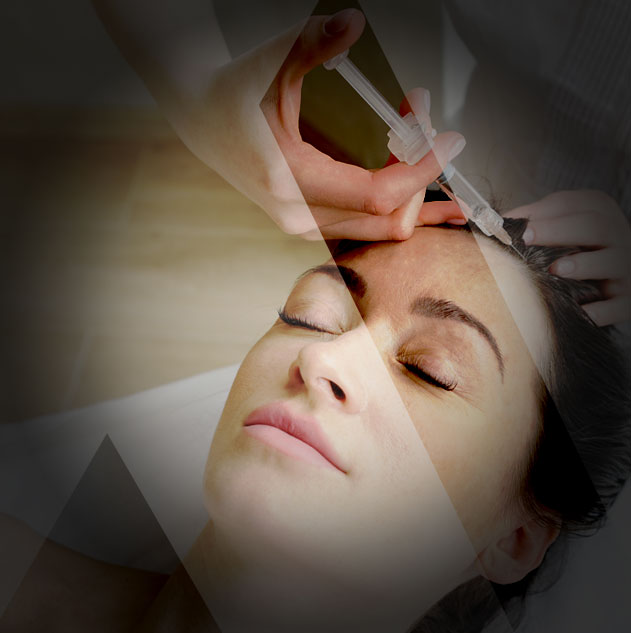
In a hair transplant, a doctor, supported by a trained team, moves hair follicles from the back or sides of your head to the thinning or bald areas of your scalp.
Also called hair restoration, the procedure is done in the clinic under local anaesthesia; it is a surgical operation that takes several hours.
Who can have a hair transplant ?
Many adults, men and women, can have a hair transplant, but not everyone is a suitable candidate; the procedure takes many hours and results vary.
There are conditions that should be taken into consideration before deciding on the procedure, such as:
- Having enough healthy hair on your scalp to be transferred.
- Being able to grow hair on the thin area of the scalp (no scarring that prevents growth).
- You must be healthy enough, for example without unstable heart or kidney conditions.
- Many surgeons advise being at least in your mid-twenties, once the pattern of hair loss is clear.
- If you have a bleeding disorder such as haemophilia, or a blood-borne illness, the operation needs special precautions or may not be advisable.
What is a hair transplant in Turkey and who is it for?
A hair transplant in Turkey is a surgical procedure, carried out in a Turkish clinic or hospital under the responsibility of a doctor, in which hair follicles are taken from a permanent, hair-bearing area of your scalp (usually the back and sides) and implanted into thinning or bald areas, to restore density and the hairline. Because the follicles from the donor area are genetically resistant to the hormone that causes pattern baldness, the transplanted hair generally keeps growing for life, although the rest of your natural hair may continue to thin. Most operations in Turkey use FUE (follicular unit extraction), often with sapphire blades, or DHI (direct hair implantation with an implanter pen), and take one day under local anaesthesia, with results that appear gradually over 9 to 12 months and are final at about 12 to 18 months. Aram Clinic says it offers hair transplant in Turkey in a clinic in Istanbul at a low price, in an all-inclusive package that covers the hotel, medical transport, the medical team’s fees and the post-operative medication; these are the clinic’s own descriptions and should be verified in writing.
A hair transplant is for adults who have lost hair mainly because of androgenetic alopecia (male or female pattern hair loss), or because of scarring from injury or surgery, and who have enough healthy donor hair to cover the area they want treated. It is not suitable for everyone: people with unstable or active hair loss from other causes, very limited donor hair, or unrealistic expectations may not benefit. Hair loss can lead to a loss of confidence, and for some people a transplant helps; but it is major cosmetic surgery, and results depend on the doctor, the plan and your own hair.
This page answers the questions people ask most: how much a hair transplant costs in Turkey compared with the UK and the US, what a package includes, whether it is safe, how FUE, DHI, sapphire and FUT techniques differ, how many grafts you need, who is a candidate (including women and people with afro-textured hair), how the day of surgery works, what recovery and growth look like month by month, what can go wrong, how long to stay in Turkey, when you can fly home, how to read reviews and before-and-after photos and how to choose a clinic. It draws on guidance from the International Society of Hair Restoration Surgery, the British Association of Hair Restoration Surgery, the NHS and the American Academy of Dermatology, and on information supplied by Aram Clinic. It is general information, not medical advice: a doctor must examine your scalp before any operation.
If you are also looking at other hair and face treatments in Turkey, Aram Clinic publishes guides on beard transplant, eyebrow transplant, aesthetic medicine, rhinoplasty and facelift. For a personal estimate, use the free express quote.
What are the key facts about a hair transplant in Turkey at a glance?
| Question | Short answer |
|---|---|
| What is moved? | Hair follicles from the permanent donor area (back and sides) to thinning or bald areas. |
| Main techniques | FUE (including sapphire FUE), DHI and, less often, FUT (strip). |
| Anaesthesia | Local anaesthesia; you are awake; sedation is sometimes offered. |
| Duration of surgery | About 6 to 10 hours in one day, including breaks. |
| Typical number of grafts | From about 1,500 to 4,500 in one session for most patients; very large sessions raise donor-area concerns. |
| Time to plan in Turkey | About 3 to 5 days: consultation, surgery, first wash and check. |
| When can I fly home? | Often 1 to 3 days after surgery, once the clinic has checked the scalp and done the first wash. |
| Shedding (“shock loss”) | Transplanted hairs usually fall out at 2 to 8 weeks, then regrow. |
| First visible growth | Around month 3 to 4; about half the result by month 6; full result at 12 to 18 months. |
| Does it stop further loss? | No: native hair can continue to thin; medication may be advised. |
| Main risks | Swelling, folliculitis, shock loss, poor growth, donor-area scarring, unnatural hairline. |
| Insurance | Cosmetic hair transplants are not covered by public systems or most insurers. |
These are typical ranges, not promises: results depend on your hair, the plan and the doctor. A small hairline restoration and a large crown and frontal restoration are very different projects.
If you remember only one thing: the result of a hair transplant depends far more on the planning, the number of grafts you can safely take and the skill of the team than on the technique’s brand name or the price.
How much does a hair transplant cost in Turkey compared with the UK and the US?
The price of a hair transplant in Turkey depends on the number of grafts, the technique (FUE, sapphire FUE, DHI), the area treated, the clinic and the doctor, the number of hair-transplant days and what the package includes, such as hotel nights, transfers, medicines and PRP sessions. In general, quotes in Turkey are much lower than in the UK, the US or Switzerland, which is why searches such as “how much is a hair transplant in Turkey”, “hair transplant cost Turkey”, “hair transplant cost UK vs Turkey” and “5000 grafts hair transplant cost Turkey” are among the most frequent in cosmetic surgery. Aram Clinic states that its hair transplant costs about half as much as in countries such as Switzerland, the United States and the UK, thanks to an all-inclusive package; the real difference depends on what you compare, so check the claim against a written quote and a quote from a surgeon at home.
Prices are quoted in different ways: a fixed package for a session regardless of the number of grafts, a price per graft, or a price for a “maximum” number of grafts. Each has traps. A fixed package can push a clinic to harvest as many grafts as possible in one day; a per-graft price makes the total depend on the final count, which should be written down; and “unlimited grafts” offers are a warning sign, because the number you can safely harvest is limited by your donor area. Ask what the quote assumes in terms of grafts, density and area, what happens if more or fewer grafts are used, and whether a second session is covered.
What should a written hair transplant quote include?
Plan : areas to be treated, hairline design and estimated number of grafts.
Technique : FUE, sapphire FUE, DHI or FUT, and who performs each step.
Doctor and clinic : names, specialty and the clinic’s licence.
Medical items : anaesthesia, PRP, medicines, post-operative kit and the first wash.
Travel services : hotel nights, transfers, interpreter.
Aftercare : check-ups and remote follow-up for 12 months.
Revision : terms and who pays if growth is poor.
Payment terms : deposit, refund conditions, currency.
Aram Clinic does not publish fixed prices on this page because the cost depends on your hair loss and the number of grafts: request a free express quote with photographs of your scalp.
What is included in an all-inclusive hair transplant package in Turkey?
An all-inclusive package is a single price intended to cover the main parts of the trip. Aram Clinic describes its package as covering your hotel stay, your medical transportation, the medical team’s fees and your post-operative medication. A complete hair transplant package often also includes the consultation and hairline design, the surgery, local anaesthesia, a PRP session, the first-wash appointment, a post-operative kit (shampoo, lotion, a neck pillow), airport transfers, an interpreter or coordinator and follow-up for a year. Searches for “hair transplant package Turkey”, “hair transplant Turkey with hotel” and “Turkey hair transplant all inclusive” show how many patients compare packages.
“All-inclusive” has no legal definition, so ask for the list in writing. Check what is excluded: extra nights if you need to stay longer, a second session, additional PRP, flights and the cost of correcting a poor result. Be wary of packages that include a fixed number of grafts regardless of your donor capacity, and of very low prices that depend on high-volume schedules.
Treat promises of a “guaranteed result” or “100 percent growth” with suspicion: no clinic can guarantee how your hair will grow.
Is Turkey good for hair transplants and why do so many people go there?
Turkey is the world’s best-known destination for hair transplants, because of a high volume of operations, competitive prices and packages, a large number of clinics in Istanbul and other cities and direct flights from most of Europe. Doctors and clinics there have performed a very large number of transplants and some have a great deal of experience, which can mean smoother planning and techniques that are well rehearsed. The reputation, however, is built partly on marketing, and quality varies widely, from highly skilled medical teams to high-volume operations in which technicians perform most of the work. The question “is Turkey good for a hair transplant?” therefore has the answer: it can be, if you choose a clinic with transparent doctor involvement, a realistic plan and a good record.
The reasons patients give for choosing Turkey are price, availability of dates, packages that handle logistics, the volume of experience and the possibility of combining the trip with a short holiday. The limits are follow-up (most problems appear weeks or months after you return), the difficulty of judging quality from marketing images, and the practices of some clinics that treat patients on an industrial scale. Reports of procedures that “went wrong” (poor growth, unnatural hairlines, damaged donor areas) mostly come from over-harvesting, rushed work, poor planning or aftercare, not from the country itself.
A transplant is only as good as the doctor who plans it and the team that performs it. Ask exactly who designs the hairline, who extracts and who implants, and how many patients the team treats each day.
If you cannot arrange a plan for follow-up and a doctor at home who will review your scalp, having the procedure at home may be the safer choice, even at a higher price.
Is a hair transplant in Turkey safe and what makes a procedure go wrong?
A hair transplant is a minor surgical procedure under local anaesthesia, and serious complications are uncommon when it is performed in a licensed facility under medical supervision on a suitable patient. The risks come from the choices made around the operation: who performs it, how many grafts are taken, how the hairline is designed, how clean the environment is and how well you are followed up. Rules in Turkey require hair transplants to be performed in licensed health facilities under the responsibility of a doctor, but, as in every country, practice varies, and unlicensed or poorly supervised work exists; verify the clinic’s licence and the doctor’s identity. Search terms such as “hair transplant gone wrong Turkey” reflect real patient experiences.
The most common causes of poor outcomes are over-harvesting the donor area (leaving a patchy, thin or scarred back of the head), implanting too many grafts too densely (which can reduce blood supply and survival), implanting at the wrong angle or direction, designing a hairline that is too low or too straight for your age and face, working on patients who are not suitable, infection from poor hygiene and a lack of aftercare. Some of these problems can be partly corrected by a skilled surgeon, but donor-area damage cannot easily be reversed.
You can reduce the risk by choosing a clinic where a doctor examines your scalp, designs the hairline and supervises the procedure, by being realistic about the number of grafts and by following the aftercare.
If you have signs of infection, severe pain or discharge after you return, see a doctor promptly and tell them that you had a hair transplant.
What are the hair transplant techniques: FUE, sapphire FUE, DHI, FUT and unshaven transplants?
| Technique | How it works | Advantages | Limits |
|---|---|---|---|
| FUE (follicular unit extraction) | Follicles are extracted one by one with a small punch and implanted into small incisions. | No linear scar; short recovery; the most common technique in Turkey. | Needs shaving the donor area (or a trimmed zone); time-consuming; scattered tiny dot scars. |
| Sapphire FUE | FUE using sapphire (synthetic gemstone) blades to make the recipient incisions. | Finer, V-shaped incisions that some surgeons find give faster healing; popular. | No consistent evidence of better growth than steel blades; skill matters more. |
| DHI (direct hair implantation) | Follicles are extracted as in FUE and loaded into an implanter pen (Choi-type) that places them directly. | Can allow precise control of angle and depth; sometimes used for unshaven or dense work. | Slower; costlier; no proven higher density than FUE. |
| FUT (follicular unit transplantation, strip) | A strip of scalp is removed from the donor area and dissected into grafts. | More grafts in one session; low graft damage; common in the UK. | A linear scar; longer healing; not suited to very short hair. |
| Unshaven or long-hair FUE | Follicles are extracted from an area where hair is left long. | Discreet; useful for small sessions and women. | Fewer grafts per session; costlier. |
Most clinics in Turkey perform FUE, increasingly with sapphire blades, and offer DHI as a premium option; FUT is less common there. The label matters less than who performs the work, how many grafts are taken and how the grafts are handled. Hair transplantation is the same principle in all of them: moving permanent follicles from the donor area to the thinning area. The claims that DHI or sapphire FUE always gives higher density or faster growth are marketing claims rather than proven facts, and published comparisons find similar results when the surgeon is experienced.
Searches for “DHI hair transplant Turkey”, “FUE hair transplant Turkey” and “DHI hair transplant Turkey cost” are frequent. Ask the doctor which technique they recommend for you and why, rather than choosing by name.
How many grafts do I need and how many can be taken in one session?
The number of grafts you need depends on how much of your scalp is thinning or bald, the density you want and the quality of your donor hair. As a rough guide used by many surgeons, a limited receding hairline (Norwood stage 2 to 3) may need about 1,500 to 2,500 grafts, a hairline and front (stage 3 to 4) about 2,500 to 3,500, a hairline, front and mid-scalp (stage 4 to 5) about 3,500 to 4,500, and a larger area including the crown (stage 5 to 7) about 4,500 to 6,000 or more, often in more than one session. A graft is a follicular unit that holds one to four hairs; the number of hairs matters as much as the number of grafts. Searches for “5000 grafts hair transplant cost Turkey” show how many patients think in terms of graft numbers.
There is a limit to what the donor area can safely provide: it is finite and does not regenerate. Experienced surgeons plan the lifetime supply, leaving room for future sessions as the hair loss progresses, and avoid taking too many grafts in one session or too many from a small area. Claims of very large sessions of six thousand grafts or more in a day should be questioned, because they increase the risk of donor-area thinning, lower graft survival and, in some cases, rely on technicians. Many clinics cap sessions at a few thousand grafts, and some advise two sessions.
Ask for a written plan with the number of grafts, the areas, the target density and the reasoning, and ask what remains in reserve in your donor area.
A responsible doctor will tell you if your donor supply cannot cover the area you want, and will adjust the plan rather than overpromise.
What are the types of hair transplant?
There are two main types of hair transplant, Follicular Unit Transplant (FUT) and Follicular Unit Extraction (FUE); FUE is now more common, often with sapphire blades, and DHI is a variant of FUE that uses an implanter pen.
The doctor should recommend the technique that suits you after examining your scalp and hearing your preferences.
FUT
This technique involves the doctor using a scalpel to remove a strip of scalp from the back or side of the head. The strip is then dissected under magnification into small groups of follicles (grafts) that are prepared for transplantation. While this is done, the doctor makes very small holes in the recipient area, and the grafts are then placed individually into these holes. This method has been in use for many years and has been refined since it was introduced; it was seen as revolutionary for restoring a natural hairline, and it remains common, particularly in the UK.
FUE.
This method was developed to deliver similar results to FUT while avoiding some of its disadvantages. As in FUT, the doctor takes hair follicles from the back of the head and moves them to the thinning or bald area. However, FUE does not involve removing a strip of scalp: individual follicles are collected directly from the scalp, then inserted into small incisions made by the doctor. While this method takes more time, it avoids the linear scar and the wound care needed with FUT, although it leaves tiny dot scars and needs a trimmed or shaved donor area.
How to prepare for hair transplant?
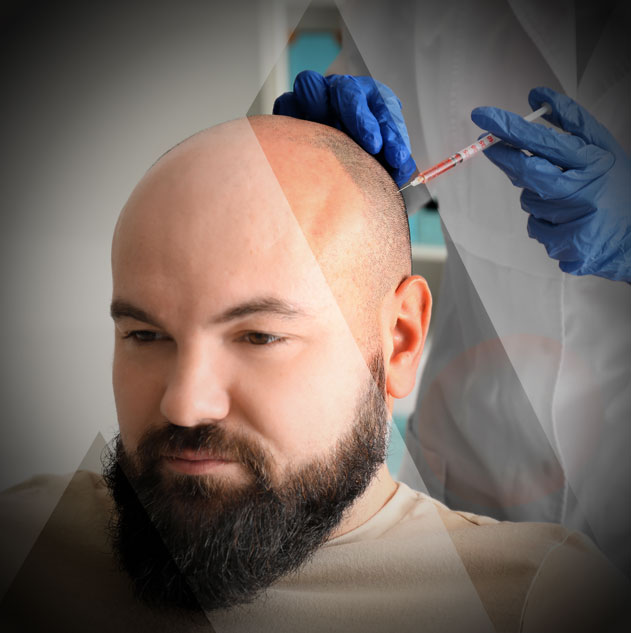
Like any other operation, a hair transplant requires some preparation so that it goes smoothly and to lower the risk of complications. Smoking and alcohol consumption should be reduced while you wait for the day of the procedure; many surgeons ask you to stop smoking for as long as possible before and after surgery, and alcohol for several days, because smoking affects healing and prolongs wound recovery. Avoid chemical hair products such as gel and hair spray before the procedure. Wash your hair before the operation and wear comfortable, button-up clothes so that you do not damage the grafts when you put them on or take them off. Follow your clinic’s instructions on hair length before surgery; some clinics ask you not to have a haircut beforehand, while others trim the donor area themselves. Some clinics suggest massaging the scalp for 10 to 30 minutes a day for a month beforehand to soften the skin; the evidence for this is limited, so follow your clinic’s advice. Try avoiding caffeine and energy drinks on the day. Do not drive yourself after the procedure; ask for a transfer or a companion.
What happens during the hair transplant procedure?
The operation usually lasts between 4 and 10 hours, depending on the number of grafts, your hair and the technique you and your doctor have chosen. Most patients stay awake; the anaesthetic numbs the scalp, and your doctor may offer a mild sedative to help you relax. The operation begins by removing healthy hair from the donor area, usually the back and sides of the head, because this hair is genetically resistant to the hormone that causes pattern baldness. The follicles are removed either by cutting a strip of scalp or by taking them one by one, depending on the technique chosen (FUT or FUE). The recipient sites are prepared while the removed follicles are sorted and kept in a suitable solution; in many clinics technicians help with these steps under the doctor’s supervision, so ask exactly who does what. The grafts are then placed gently in the recipient sites; once all the grafts are in place, the scalp is cleaned and a dressing or headband is applied.
Who can have a hair transplant and who should not?
A hair transplant is suitable for adults who have enough healthy hair in the donor area to transfer, who can grow hair on the area to be treated (the scalp must not be scarred in a way that prevents growth), who are in good general health and whose hair loss has been diagnosed. It is generally advised to wait until the pattern of hair loss is clear, which is why many surgeons prefer patients in their mid-twenties or older: in younger men, the hair loss can progress and a hairline that looks good at twenty can look wrong at forty. The operation is open to men and women, although the plan differs. Not everyone is a good candidate: a transplant works best in pattern baldness and in scarring from injury or surgery, and is not a treatment for all kinds of hair loss.
A transplant is postponed or avoided in people with unstable hair loss (such as active alopecia areata or a recent sudden shedding), diffuse thinning with no stable donor area, active scalp infection or inflammatory scalp disease, some scarring alopecias that are active, uncontrolled medical conditions such as unstable heart disease or kidney problems, bleeding disorders such as haemophilia or a blood-borne infection that needs special precautions, and unrealistic expectations. Smoking and some medicines can slow healing. People with controlled diabetes or other conditions may be treated with their doctor’s agreement.
Having a diagnosis first is important: a trichologist, dermatologist or experienced hair surgeon should identify the cause of your hair loss before recommending surgery.
Be wary of a clinic that tells every patient that they are a candidate and offers a quote before looking at your scalp.

Hair loss affects many people at some point; some causes can be treated, and pattern baldness can be managed with medication or a transplant.
Hair loss can appear in so many different ways, and it could come suddenly or gradually, and it has some symptoms such as :
- Circular or patchy bald spots.
- Full-body hair loss.
- Patches of scaling that spread over the scalp.
- Gradual thinning on top of head.
- Hair that breaks easily or shedding more than usual.
There are so many reasons and causes behind hair loss, some are genetic while the other are caused by your lifestyle.
Some of these causes are :
- Being hereditary meaning, it's in your family history.
- High levels of stress.
- Hormonal changes.
- Hairstyles and treatments.
- Radiation therapy to the head.
- Poor diet.
- Medical conditions.
- Significant weight loss.
How is the cause of hair loss diagnosed and why does it decide whether a transplant will work?
Before any surgery, a doctor should work out why you are losing hair. The assessment starts with your history (when it started, how fast, family history, recent illness, stress, diets, medicines, hair treatments) and an examination of the scalp and the pattern of loss, often with a handheld magnifier (trichoscopy) that shows the size and density of hairs and the condition of the follicles. Blood tests may check iron, thyroid function, vitamin D and hormones, particularly in women or in sudden loss. A scalp biopsy is occasionally needed for scarring or unclear conditions. The pattern, for example a receding hairline and thinning crown in men, or diffuse thinning at the parting with a preserved hairline in women, suggests androgenetic alopecia, which a transplant can treat; a round patch suggests alopecia areata; sudden diffuse shedding suggests telogen effluvium; and a red, scaly or painful scalp suggests inflammation or scarring that needs treatment first.
This matters because a transplant treats the result of permanent hair loss in a stable pattern, not its cause. If the cause is a treatable condition, medical treatment may restore the hair without surgery. If the loss is unstable, a transplant may be wasted as the hair around it falls out. If the donor area is also thinning, the transplanted hair may not last. A doctor who is honest about this will sometimes advise you not to have a transplant.
Searches for a diagnosis are also a good sign: a clinic that insists on one before quoting a price is usually more careful than one that gives a price from a single photograph.
If you have any red flags, such as patches, scarring, itching, pain, rapid loss or other symptoms, see a dermatologist before planning surgery.
What are the alternatives to a hair transplant: finasteride, minoxidil, PRP and others?
| Treatment | What it does | Evidence and notes |
|---|---|---|
| Finasteride (men) | Reduces dihydrotestosterone; slows loss and can regrow some hair. | Prescription; effective for many men; side effects possible; not for women who may become pregnant. |
| Dutasteride | Stronger DHT blocker. | Prescription; used off-label in some countries. |
| Minoxidil (topical or oral) | Prolongs hair growth and thickens hair. | Works while used; shedding at the start; oral form needs medical supervision. |
| Platelet-rich plasma (PRP) | Injection of the patient’s plasma into the scalp. | Modest evidence for benefit; often used with other treatments. |
| Low-level laser therapy | Light devices claimed to stimulate follicles. | Limited evidence; varying quality of devices. |
| Scalp micropigmentation | Tattoo-like pigment that mimics short hair. | Camouflage, not regrowth. |
| Hairpieces and styling | Cosmetic coverage. | No medical risk; ongoing upkeep. |
A hair transplant does not stop your native hair from thinning: surgeons often recommend continuing or starting medication, such as finasteride or minoxidil, to protect the hair around the transplanted area, so that the result stays natural as you age. Many surgeons see medical treatment as the first step, especially in younger patients, and surgery as a complement. Ask your doctor about the benefits and side effects of each. See the guide to aesthetic medicine in Turkey for PRP and related treatments.
If medication has not given you the result you want, or you do not want to take it, a transplant may be appropriate; discuss with a doctor who is not only selling surgery.
Can women have a hair transplant in Turkey and is it different from men’s?
Yes, women can have hair transplants, and “female hair transplant Turkey” is a frequent search, but the indications are narrower and the planning is different. Women with pattern hair loss usually thin diffusely over the top of the head, with the hairline preserved, and the donor hair at the back may also be affected, so not every woman is a candidate. Suitable cases are a stable pattern with a good donor area, a high or receding hairline from earlier surgery or traction, hair loss from scarring after a facelift or an injury, thinning of the eyebrows and some women with a thin parting. A diagnosis first is essential, because many causes of female hair loss, such as thyroid problems, iron deficiency, hormonal conditions or medication, can be treated without surgery.
Women often prefer an unshaven or partially shaved technique to hide the donor area, and they usually need fewer grafts, with a focus on density at the front and the parting rather than a new hairline. The results are generally subtle and natural. Costs are usually lower for smaller sessions, but the unshaven technique can be costlier per graft.
Women are also treated for thinning eyebrows and, rarely, for other areas; see the guide to the eyebrow transplant.
Ask whether the doctor has specific experience with women’s hair loss, how the donor area was assessed and what is planned if the hair loss progresses.
Is an afro-textured hair transplant different and what should I ask?
Afro-textured and tightly curled hair behaves differently in a transplant. The follicles are curved under the skin, so a standard extraction punch can cut the follicle and the grafts are more fragile; the hair is thicker and curlier, which gives the impression of greater density with fewer grafts but makes extraction and planning more demanding. The scalp also has a higher tendency to form keloid scars in some people, which matters for the donor area and the incisions. Searches such as “afro hair transplant Turkey” show that many patients with this hair type travel, and that quality varies.
If you have afro-textured hair, ask whether the doctor has specific experience with this hair type, how many such patients they treat, which extraction tools they use for curved follicles and whether they ask about keloid scarring. Ask to see before-and-after photographs of patients with hair like yours, not generic images. A longer consultation and a careful test of the donor area are reasonable.
Consider a smaller first session to see how your hair responds, particularly if you are prone to keloids.
Be wary of clinics that apply the same plan and price to every hair type.
How do I prepare for a hair transplant and what happens at the consultation?
Preparation begins before the trip. A remote consultation reviews your photographs, medical history, medicines and hair-loss pattern, and a doctor gives a provisional plan: areas to treat, estimated grafts and technique. On arrival, the doctor examines your scalp, measures the donor density, checks for conditions that could affect healing, designs the hairline with you (agreeing its position and shape, which should suit your age and face) and confirms the plan and the consent. Blood tests may be requested. Tell the doctor about all your medicines, allergies, previous hair treatments and any history of keloid scars or bleeding problems.
In the days before surgery you are usually asked to stop blood-thinning medicines such as aspirin and anti-inflammatory drugs if your doctor agrees, avoid alcohol for a few days, stop smoking as long as you can before and after surgery because it slows healing, avoid caffeine on the morning, wash your hair the day before and wear a loose button-up shirt. Some clinics ask you to stop minoxidil for a few days; follow the specific instructions. Eat a good breakfast on the day.
The hairline design is the most important decision. A hairline that is too low, too straight or too dense for your age can look unnatural and cannot easily be corrected. Take your time, bring photographs of what you like and listen to the doctor’s advice.
Ask who will design the line, who will perform each step and how many grafts will be used in the front.
What happens on the day of a hair transplant, step by step, and does it hurt?
A hair transplant is carried out in one day, usually between six and ten hours including breaks, under local anaesthesia. The hair in the donor area is trimmed or shaved, the scalp is cleaned and the doctor injects local anaesthetic into the donor and recipient areas; the injections are the most uncomfortable part, and after them you feel pressure and movement but not pain. In FUE, follicles are extracted one by one from the donor area, which takes about two to four hours; there is a break for food and rest; the follicles are then implanted into small recipient sites made along the hairline and in the thinning areas, which takes another three to five hours, either by making incisions and placing the grafts or, in DHI, by using the implanter pen. Platelet-rich plasma may be applied. At the end, the scalp is cleaned and a light dressing or a headband is applied. You are given instructions and a post-operative kit.
You can usually read, watch screens or sleep on your stomach or side during the procedure. Some clinics offer light sedation. Most patients rate the discomfort as moderate during the injections and mild afterwards. Painkillers are provided for the evening.
Ask who extracts and who implants, whether a doctor is present throughout, how many patients the team treats the same day and what hygiene protocols are used.
Large sessions often involve technicians performing most of the extraction and implantation under the doctor’s supervision; the extent of the doctor’s role is a legitimate question.
What happens in the first days after a hair transplant: swelling, scabs, first wash and sleeping?
In the first days the scalp is tender and the recipient area is covered with tiny scabs around each graft; the donor area can feel tight and look pink. Swelling of the forehead and sometimes around the eyes appears around the second to fourth day and settles within a week, which is why some clinics prescribe anti-inflammatory medicines. The first hair wash is usually done at the clinic on day one to three, and you are taught how to wash gently with the lotion and shampoo provided; the scabs fall off after about seven to fourteen days with gentle washing. Sleep on your back with your head raised, ideally with a neck pillow, for the first week or so, avoid touching or scratching the grafts, avoid hats and tight headgear, and avoid direct sun, sweating, swimming, saunas and strenuous exercise for about two weeks or as advised. Alcohol and smoking should be avoided for as long as advised.
Itching is common as the scabs heal; gentle washing and the prescribed lotion help, and you must not scratch. The small red marks fade over a few weeks, and the donor area usually looks normal after about a week as the hair grows.
Most patients return to desk work within three to seven days, depending on how visible the scabs and redness are and whether they are comfortable with them.
Follow the clinic’s written aftercare exactly, as the grafts are fragile in the first days.
When will the results for hair transplants be visible?
After the surgery you will be eager to see the final results. Most people see a clear result between 6 and 9 months, but the final result is judged at 12 to 18 months. It is normal for the transplanted hairs to fall out within 2 to 8 weeks, and by the third month the hair may look thinner than before; this is also normal, and new growth starts around month 3 to 4.
How will the recovery from hair transplant go ?
After the surgery is done, you will need to take extra care of your hair and also to your lifestyle and diet. It is advised to take some time off work; you will have some mild pain and swelling, not to worry because your doctor will be giving you pain-killers for that. You will need to take extra care of your hair; you can usually shower after a hair transplant, but you should follow your clinic’s instructions and keep water pressure and rubbing off the grafts. The first wash is often done at the clinic after 24 to 72 hours, taught gently, and after about a week to ten days you can usually wash your hair more normally.
You should also avoid :
- Sleeping Flat.
- Dyeing Your Hair.
- Forgetting to Drink Water.
- Applying Ice Directly to the Scalp.
- Soaking Up the Sun.
- Drinking and Smoking.
- Eating Fast Food.
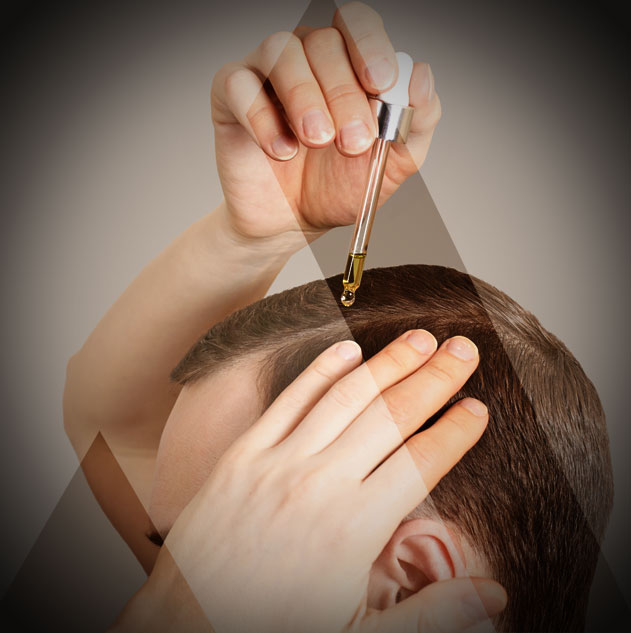
What is the hair transplant recovery and growth timeline month by month?
| Time | What to expect | What to do |
|---|---|---|
| Days 1 to 3 | Tenderness, swelling of forehead, first wash; tiny scabs. | Sleep with head raised; wash gently as taught; no touching. |
| Days 4 to 14 | Swelling subsides; scabs fall off; itching. | No sport, sun, swimming or hats; gentle washing. |
| Weeks 2 to 8 | Transplanted hairs shed (“shock loss”); the scalp looks like before. | Normal; patience; keep to aftercare and any medicines. |
| Months 3 to 4 | First thin new hairs appear; some folliculitis (small pimples) is common. | Continue care; contact the clinic if red or painful bumps. |
| Months 5 to 8 | Hair thickens and lengthens; about half of the final result is visible by month 6. | Review photographs; styling possible. |
| Months 9 to 12 | Most growth is visible; density improves. | Compare with baseline photographs. |
| Months 12 to 18 | Final result; texture and density stabilise. | Review with the doctor; discuss a second session if needed. |
The shedding at two to eight weeks is normal and does not mean the transplant has failed: the hair shafts fall out while the follicles beneath them rest, and new hairs grow from month three or four. Hair at first grows thin and fine and then thickens. Searches such as “hair transplant after 1 year Turkey” and “Turkey hair transplant results” reflect how long patients wait: the final result is judged at twelve to eighteen months, not at three months.
If you have no growth by about month eight, or large patchy areas, ask your doctor to review it and look at the plan; poor growth can be due to the patient’s hair, the technique or aftercare.
What are the results of a hair transplant in Turkey and how long do they last?
When the plan is realistic and the team is skilled, a hair transplant can give a natural-looking hairline and a clear improvement in density, and many patients feel more confident. In well-run clinics, a high proportion of transplanted follicles survive and grow, often quoted at about 90 percent or more, but this depends on the patient, the handling of the grafts and the aftercare; there is no single reliable figure, and claims of a “100 percent success rate” should not be trusted. Transplanted hair from the donor area is generally permanent, because those follicles are resistant to the hormone that causes pattern baldness, so it should keep growing for life. Your native hair, however, may continue to thin, which can leave the transplanted area looking isolated if the surrounding hair is lost.
Results do not look like a teenager’s hair: the density achieved is usually lower than the original, and the aim is natural coverage. A second session is sometimes needed to increase density or to extend the area as hair loss progresses. Searches for “natural hair transplant results Turkey”, “Turkey hair transplant success rate” and “success stories” show that patients want to know what is realistic. A good doctor will show you a likely result based on your hair, not an ideal.
Avoid unrealistic expectations: aggressive hairlines and very high density often look unnatural or exhaust the donor area.
To maintain the result, protect your native hair with medication if advised, keep your scalp healthy and attend the follow-ups.
What are the risks, side effects and complications of a hair transplant?
Hair transplants have a low rate of serious complications, but side effects are common and risks exist. Common and usually temporary effects are swelling of the forehead and eyelids, redness, scabbing, itching, numbness of the scalp, small pimples (folliculitis) in the recipient area, ingrown hairs and shock loss of the transplanted hair. Less common problems include infection, cysts, thinning of existing hair near the transplanted area (“shock loss” of native hairs, usually temporary), poor or patchy growth, visible scars or dot scars in the donor area, uneven hairline, an unnatural look from poor planning and, in people prone to them, keloid scars. Rare complications include tissue damage to the skin from too-dense implantation and reactions to anaesthesia. Serious complications are very uncommon, and are more likely when the procedure is poorly planned, too large or carried out in unlicensed conditions.
Fever, spreading redness, pus or severe pain : possible infection: see a doctor promptly.
Persistent painful bumps or yellow crusts after month 2 : possible folliculitis: contact the clinic or a dermatologist.
Dark or blistered skin in the recipient area : possible poor blood supply: seek medical advice.
No growth by month 8 to 10 or thin patchy donor area : ask the doctor for a review and a second opinion.
Allergic reaction, rash or swelling of the face or throat : seek emergency care.
You can lower the risk by choosing a licensed clinic where a doctor examines you and supervises, by accepting a realistic number of grafts, by following aftercare and by reporting problems early.
If you have a problem after you return home, tell your doctor that you had a hair transplant abroad and show your operative report, and contact the clinic as well.
Hair transplant is one of the most practised cosmetic procedures, and, in well-run clinics, a minor surgical procedure under local anaesthesia.
Like any other medical or cosmetic procedure, it has risks and side effects; some, such as swelling and itching, are common, and serious problems are uncommon but real, so you need to know them before deciding.
- An allergic reaction to the anaesthetic or the products used (the grafts are your own hair).
- Mild bleeding.
- Infection.
- Head aches.
- Swelling in the scalp.
- Itching.
- Unnatural-looking tufts or a poorly designed hairline, shock loss of existing hair, poor or patchy growth and scarring in the donor area.
- Bruising around the eyes.
What should I remember about hair transplant risks and results?
A hair transplant can restore hair in suitable cases, but results vary, and they depend on a careful diagnosis, a realistic plan and a skilled team.
Aram Clinic organises hair transplants with partner clinics; whatever you choose, ask for the doctor, the plan, the number of grafts and the aftercare in writing before you decide.
How long should I stay in Turkey and when can I fly home after a hair transplant?
A hair transplant trip is short: plan about three to five days in Turkey. A typical schedule is arrival and transfer to the hotel on day one, with a consultation and, sometimes, blood tests; the operation on day two, from the morning to the early evening; the first wash and a check-up on day three; and departure on day three or four. Some clinics also arrange a check at a later date by video. Searches for “flight back from Turkey hair transplant” are frequent: most surgeons allow patients to fly after the first wash and check, often one to three days after the operation, because the grafts are secure once the first scabs form, but you should follow your clinic’s advice. Avoid pressure on the scalp, do not wear a tight hat, use a neck pillow, avoid touching the grafts and protect the head from the sun. Cabin pressure does not affect the grafts. Flights to Istanbul take about three and a half to four hours from the UK and Western Europe and around nine to eleven hours from the US East Coast.
Check the current visa or e-visa requirements for Turkey on the official government sites before you book, and make sure your passport is valid for the whole stay. Take a loose button-up shirt for the day of surgery and the way home, and a cap only if the clinic allows a loose one.
You do not usually need a companion, but a friend can help on the day of surgery and the first night.
When you get home, continue the washing routine and avoid sun and strenuous exercise until the clinic says you can.
Hair transplant in Turkey or in the UK: how do the two compare in practice?
The comparison goes beyond price. In the UK, hair transplants are carried out in clinics regulated by the Care Quality Commission, usually with a doctor or specialist surgeon more involved in the procedure, a medical consultation that includes a stated cooling-off period and local aftercare. Prices are higher, appointments may be booked weeks or months ahead and sessions are often smaller, with FUT more common. In Turkey, the volume of procedures is much higher, prices are substantially lower, dates are available quickly and packages arrange the stay, but the structure of clinics varies widely, from doctor-led teams to high-volume operations run largely by technicians, and the aftercare depends on remote contact. Searches such as “hair transplant UK vs Turkey”, “Turkey vs UK hair transplant” and “hair transplant cost UK vs Turkey” (hundreds to nearly a thousand a month) show that this is the main question for British patients.
A practical way to compare is to ask each clinic the same questions: who is the doctor, what do they do, how many grafts, what happens afterwards, what if growth is poor and what will it cost in total, including flights and accommodation if abroad. For some people, the lower total cost of Turkey is decisive; for others, the convenience of a local follow-up and the stronger regulation at home outweigh the saving. Neither choice is right for everyone.
Consider consulting a UK surgeon first for an independent opinion on your suitability and plan, even if you decide to have the procedure abroad.
Also look at the whole journey: time off work, travel, the risk of needing a revision and the cost of correcting a poor result, which can exceed the saving.
Is there a minimum age for a hair transplant and should young people wait?
There is no legal minimum age for adults, but most responsible surgeons advise against operating on very young patients, usually under about twenty-five, unless the pattern of hair loss is already clear and the donor area is strong. In a man in his early twenties, the hair loss often progresses, and a hairline designed to look right at twenty can look unnatural when the surrounding hair recedes, leaving an island of transplanted hair. The advice is usually to start with medication to slow the loss, to take photographs to monitor the progress and to plan the transplant when the pattern has declared itself, with a conservative hairline that leaves room to age. A hair transplant is not recommended for minors, except in specific medical cases.
A transplant is more predictable in older patients with a stable pattern, though donor quality and scalp condition vary with age. There is no upper age limit, provided you are in good health.
If you are young and anxious about hair loss, a consultation with a dermatologist or a trichologist may be more helpful than a surgical consultation.
Be wary of clinics that promise a permanent solution to a young patient with a progressing hair loss without discussing the risks of future loss.
Can a poor hair transplant be repaired and can I have a second session?
A second session is common and is often planned: after the first result has matured, at about twelve months, many patients add density or extend the area, particularly if hair loss has progressed. It is normal for a surgeon to plan a staged approach to preserve donor supply. Repair of a poor transplant is a specialised field. Problems that can be improved include a hairline that is too low or unnatural (by removing and re-implanting grafts, or by adding grafts to soften it), pluggy or visible grafts, scarring in the donor area (camouflaged with scalp micropigmentation or by implanting grafts into scars, which is harder) and areas of poor growth. Some damage, such as over-harvesting that leaves a thin donor area, cannot be fully reversed because the follicles removed are gone.
A repair needs a surgeon with specific experience, an honest assessment of what remains in the donor area and realistic expectations; it is often costly, and results are less predictable than those of a first procedure. For that reason, avoiding the problem in the first place by choosing carefully and by not over-harvesting is the best strategy.
Ask your clinic about its policy on a second session, including timing, cost and whether it is covered if growth is poor.
If you are unhappy with a result, wait about twelve to eighteen months before judging, then seek an independent opinion before agreeing to any repair.
How do I choose the best hair transplant clinic in Turkey and what do rankings really tell me?
Searches for “best hair transplant in Turkey”, “best hair transplant clinic in Turkey”, “top 10 hair transplant clinics in Turkey” and “best hair transplant surgeon Turkey” are among the most frequent in this field, and the lists that answer them are almost always marketing: there is no independent, reliable public ranking of Turkish hair transplant clinics, and many “top 10” pages are written or sponsored by the clinics themselves or by agencies. The best clinic for you is the one that gives you an honest plan, a named doctor involved in your case, a realistic number of grafts, a licence you can check and a follow-up that works for you; the city (Istanbul, Antalya or elsewhere) matters less than these points.
| What to check | Why it matters | How to verify |
|---|---|---|
| Doctor’s qualification and involvement | The doctor’s role in design and supervision drives quality. | Name, specialty (dermatology, plastic surgery, hair restoration), registration; ask what the doctor personally does. |
| Who extracts and who implants | In high-volume clinics technicians often do the work. | Written explanation of roles; whether the doctor is present throughout. |
| Patients per day | Rushed schedules harm results. | Ask how many patients the team treats on the same day. |
| Realistic graft plan | Over-harvesting damages the donor area. | Written plan; reasoning; what is kept in reserve. |
| Licence and hygiene | A licensed facility follows standards. | Licence from the Turkish Ministry of Health; clinic address and operating room. |
| Results at 12 months | Early photographs mislead. | Photographs of patients like you at one year, with consent. |
| Aftercare and revision terms | Most problems appear weeks later. | Written plan, 12-month follow-up, terms if growth is poor. |
Compare at least two clinics, ask for a video consultation with the doctor and be sceptical of anything that sounds like a promotion: celebrity endorsements, “limited-time” offers, guaranteed densities and unlimited grafts. A second opinion from a hair surgeon or dermatologist in your own country on your suitability and the plan is a sensible precaution. Aram Clinic says it works with an experienced medical team in Istanbul: ask for the clinic and the doctor by name in writing and verify them yourself.
A clinic that is willing to say no, to recommend medication first or to reduce the plan is usually more trustworthy than one that says yes to everything.
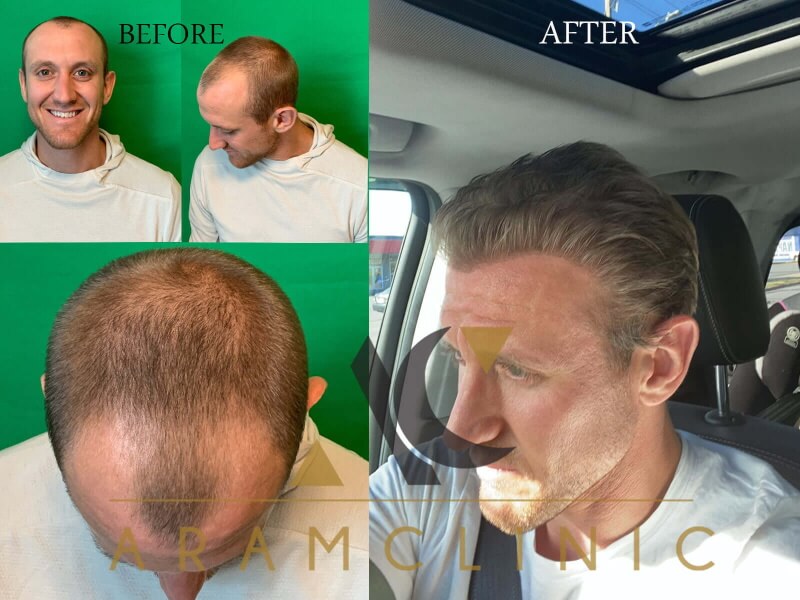
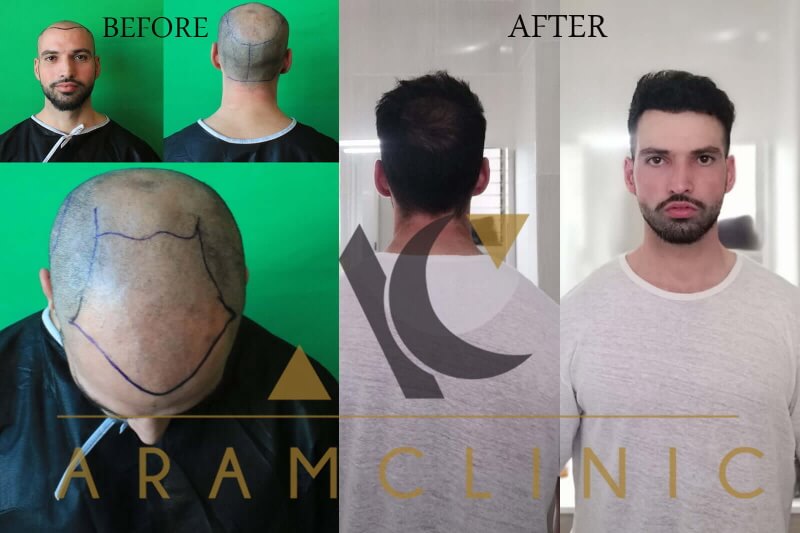
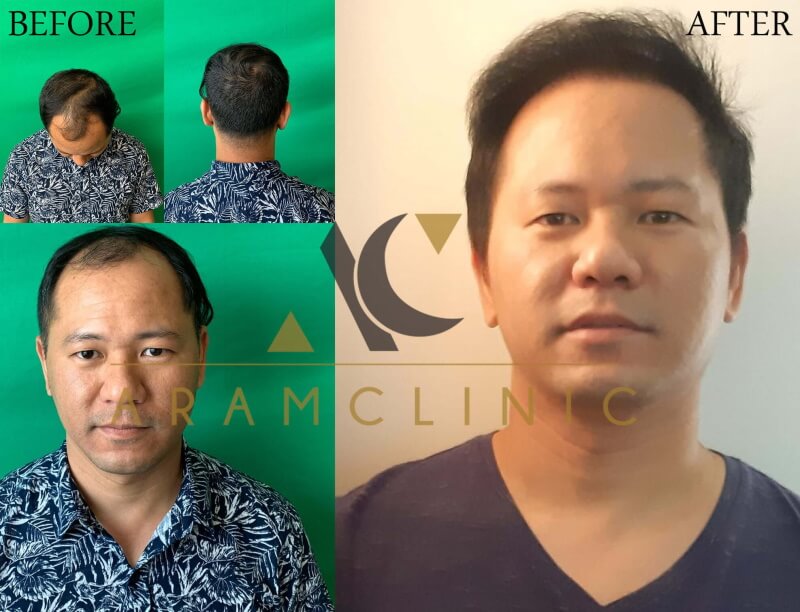
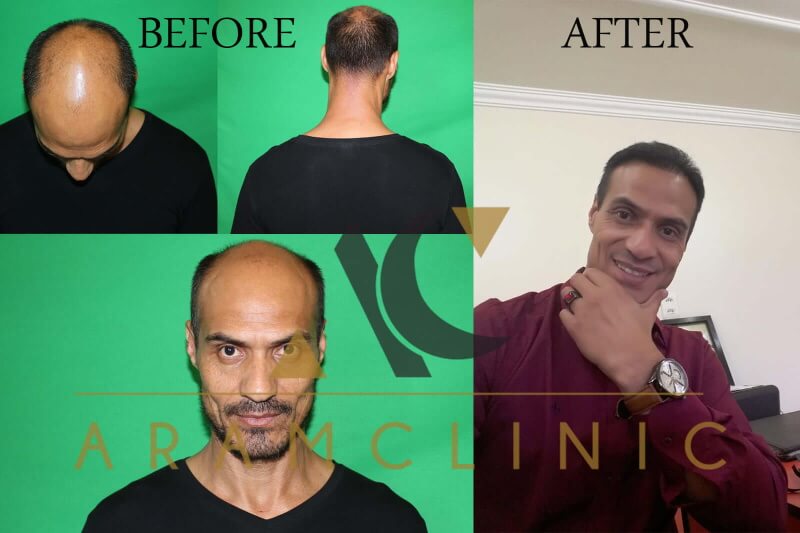
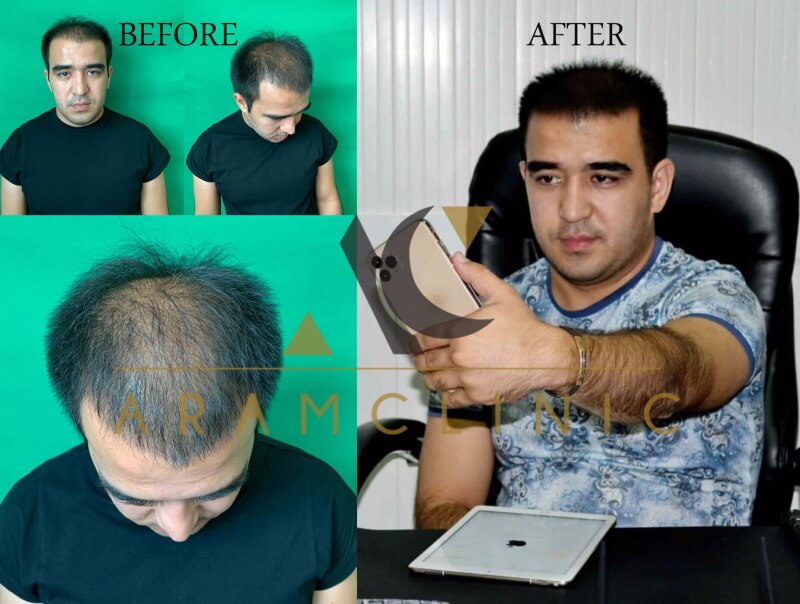
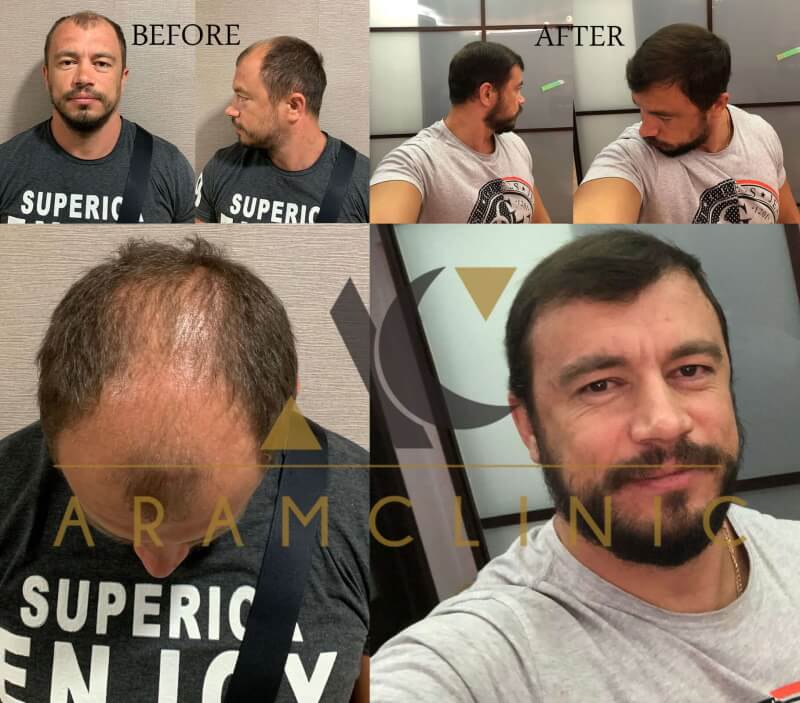
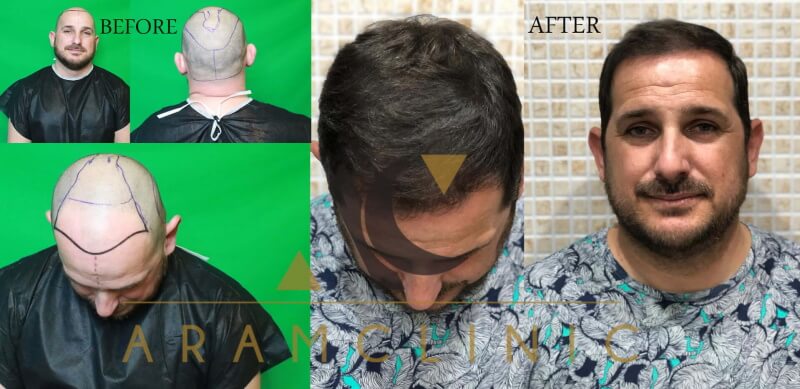
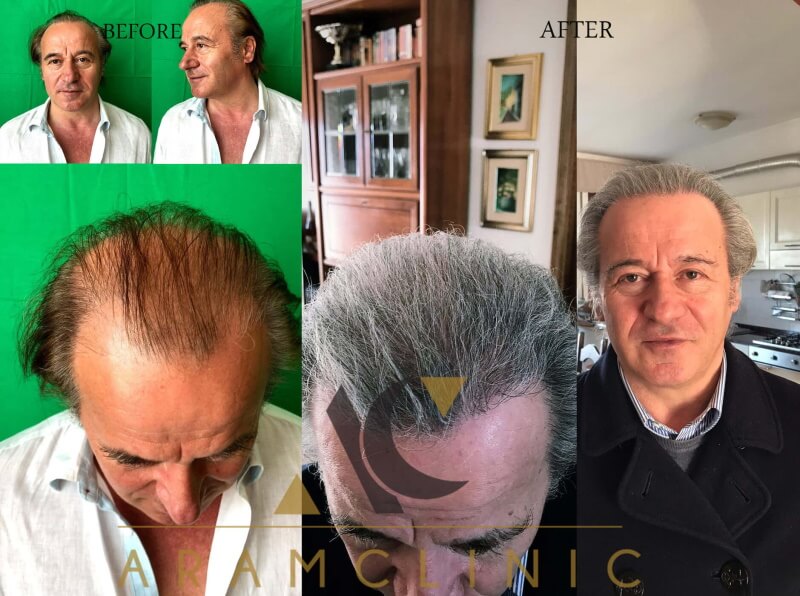
How should I read hair transplant reviews, forums and before-and-after photos from Turkey?
Reviews, forum threads and before-and-after photographs are everywhere, and they are an essential source of information and a minefield. Photographs taken immediately after surgery show swelling and scabs, and photographs at three to six months show the awkward stage of thin new hair; only photographs at twelve to eighteen months show the result. Lighting, hair length, styling, camera angle and hair-fibre products can change the apparent density, and some photographs are edited or belong to other patients. Positive reviews can be solicited or paid for, influencer posts are often sponsored and negative reviews can come from competitors. Searches such as “hair transplant Turkey reviews”, “hair transplant Turkey forum”, “before and after” and “success stories” are high in volume, which is why marketing is aimed at them.
To judge usefully, ask the clinic for a series of cases like yours (same Norwood stage, hair type and area) photographed at the same angle before surgery, at one week, at six months and at twelve months or later, and for contact with previous patients with their consent. Read independent forums, but look for consistent, detailed accounts rather than single posts, and look at how the clinic handled problems. Be especially wary of reviews that read like advertisements.
A second opinion from a hair surgeon on your own photographs is the most reliable check.
Remember that every head of hair is different: a spectacular result in someone else’s photographs is not a promise for you.
Should I use an agency, an influencer’s clinic or a pay-monthly plan?
Many patients find hair transplant clinics through agencies, social-media influencers, “consultants” on messaging apps or finance offers (searches such as “pay monthly hair transplant Turkey” are common). Agencies can simplify logistics, but they are usually paid a commission by the clinic, which gives them an incentive to sell a package, and they are not doctors; the person who sends you a plan on a messaging app may never have examined a scalp. Influencers may be paid to promote a clinic, and their results are not a guide to yours. Pay-monthly plans and deposits can tie you to a clinic before you have assessed the plan; check the interest, the cancellation terms and what happens if you are not a suitable candidate.
Whatever route you use, make sure you know exactly who is responsible for the medical care (the clinic and the doctor), who invoices, what happens if something goes wrong and who is reachable if you need help. Ask for the contract in writing, naming the clinic and the doctor, and do not pay a large deposit to someone you have not identified. Ask Aram Clinic what its exact role is, who the contracting parties are and how complaints are handled.
Warning signs include a fixed price before any assessment of your photographs, guarantees, pressure to book quickly, “unlimited grafts” and the refusal to name the doctor.
What are the downsides of having a hair transplant abroad and what if something goes wrong?
The main limits of having a hair transplant abroad concern follow-up. Problems such as poor growth, infection, folliculitis or an unnatural hairline show up weeks or months after you return, and your local doctors will have to deal with them; some are reluctant to take responsibility for work done elsewhere. Correction of a poor result, such as repair of an unnatural hairline or camouflage of donor-area scarring, is complex, costly and specialised, and may mean paying for a second operation at home or another trip. Legal recourse is more complicated across borders, and differences in language and documentation can create misunderstandings.
Emergency care is available to anyone, wherever the operation was performed; for non-urgent problems, public health systems such as the NHS do not usually fund cosmetic hair restoration or its correction, and travel insurance usually excludes planned cosmetic surgery and its complications, so a specialist policy is needed if you want cover. Before you travel, ask the clinic in writing what happens if growth is poor: whether a repeat session is offered, on what terms and who pays for travel. Identify a dermatologist or hair surgeon at home who will review your scalp in the first months, and keep every document: the quote, the plan with graft numbers, the consent form, the operative report and photographs.
If you cannot arrange these, or if your case is complex, having the procedure at home may be the safer choice, even at a higher price.
Bring photographs of your hair before surgery; they are the baseline for judging the result.
How do I plan the trip: visa, hotel, what to pack and what to avoid?
Plan about three to five days. Check the current visa or e-visa requirements for Turkey on the official government sites before you book, make sure your passport is valid for the whole stay and book flights with a margin of a day in case the clinic asks you to stay longer. In an all-inclusive package, the hotel and transfers are usually arranged for you, often with a shared transfer; check the hotel’s distance from the clinic and the room type. Pack a loose button-up shirt, comfortable shoes, a neck pillow, a thin soft cap only if the clinic allows it, your medicines and a list of your doctors and allergies. Avoid drinking alcohol and smoking before and after the operation, and avoid sunbathing and the hotel pool in the first days.
Keep copies of the quote, the plan, the consent form, the operative report and the aftercare instructions on your phone. Tell your family doctor or dermatologist about the trip and ask whether they will review your scalp a few months later.
Do not plan sightseeing in the first days after surgery: the grafts are fragile, and sweating, dust, direct sun and crowds are best avoided.
If you want to combine the trip with a holiday, do it before the operation, not after.
How does the process work with Aram Clinic, from the first enquiry to going home?
Aram Clinic describes a simple journey. First, you request a free quote online, sending photographs of your scalp from several angles and your medical history. Second, the medical team reviews them and a doctor or coordinator discusses your case with you, usually by video, explaining the proposed technique, the estimated number of grafts, the risks and the alternatives. Third, you receive a written proposal and decide without pressure. Fourth, you travel: you are met on arrival and taken to the hotel or clinic according to the plan. Fifth, after examination and hairline design, the operation takes place at the partner clinic in Istanbul, followed by the first wash and a check. Sixth, you return home with an aftercare kit and a plan for follow-up, and the team stays in touch remotely during the months of regrowth.
These are the clinic’s own descriptions. For your safety, check that the doctor and the clinic are named in writing, that the doctor has assessed your photographs, that the number of grafts and the technique are explained, that the quote lists what is and is not included, that follow-up and revision terms are in writing and that the team will advise against surgery, or a smaller plan, if it is not appropriate.
The first step is simple: complete the free express quote with your photographs, or learn more about Aram Clinic.
What aftercare and long-term care do I need to protect the result?
Aftercare begins before you leave, with written instructions on washing, sleeping, sun, exercise, medicines and warning signs. At home, wash gently as taught from the first wash until the scabs have gone, avoid scratching, keep the scalp out of the sun and protected until healed, avoid heavy exercise, swimming pools and saunas until your clinic allows them, avoid hair dyes and styling products on the grafted area for the period advised and do not wear tight hats. Expect shedding and a quiet phase, take photographs monthly in the same light for comparison and attend any follow-ups.
Long-term care matters because a transplant does not stop your native hair from thinning. Many surgeons recommend continuing medical treatment, such as finasteride or minoxidil where appropriate, to protect the hair around the transplanted area, keeping the scalp healthy and reviewing the situation with a doctor every year or so. A second session may be considered after the first result has matured, usually after twelve months. A healthy diet, no smoking and managing stress also help the hair.
Which documents should I bring back from Turkey?
Operative report : technique, number of grafts, areas treated and any complications.
Treatment plan and hairline design : photographs of the planned line.
Medication list : with doses and duration.
Aftercare instructions : washing schedule and restrictions.
Photographs : before surgery and during recovery.
Contact details : clinic, doctor, coordinator and emergency number.
Share these with your doctor as soon as you return. If anything seems wrong, contact your local doctor or a dermatologist first, and inform the clinic as well.
What questions should I ask before booking a hair transplant in Turkey?
Do I need a transplant and am I a suitable candidate : has a doctor examined my scalp, my donor area and the cause of my hair loss?
Which technique is proposed and why : FUE, sapphire FUE, DHI or FUT, and what are the differences for me?
How many grafts and why : what is the plan for the hairline and density, and what is kept in reserve?
Who performs each step : what does the doctor do personally, and how many patients are treated per day?
What are the risks in my case : and how will growth be monitored and problems handled?
What is included in the quote : extra nights, PRP, a second session, my follow-up?
What happens if growth is poor : is a repeat session offered, and who pays?
Who will look after my scalp at home : have I arranged a doctor or dermatologist?
Write your questions down and ask for the answers in writing. Take your time: a hair transplant is a planned operation that can be prepared over weeks, and no discount is worth deciding under pressure. A second opinion from a hair surgeon or dermatologist in your own country is a sensible precaution.
A team that listens, examines your scalp, explains its plan, discusses limits and risks openly and advises against surgery when it is not appropriate is more trustworthy than one that promises the lowest price, unlimited grafts and a perfect result.
Hair transplant in Turkey: a diagnosis and a realistic plan first, a doctor-led team second, the price last
A hair transplant in Turkey moves permanent follicles from the back and sides of your scalp to thinning areas, usually by FUE, sapphire FUE or DHI, in a single day of six to ten hours under local anaesthesia, with a stay of three to five days, shedding of the transplanted hairs at two to eight weeks, first new growth around month three to four and the final result at twelve to eighteen months. It works best for pattern baldness in a stable pattern with a good donor area, it does not stop your native hair from thinning, and it is not suitable for every cause of hair loss, which is why a diagnosis comes first. Quotes in Turkey are far lower than in the UK or the US and packages bundle the hotel, transfers and medication, but price is the weakest reason to choose a clinic: who actually extracts and implants the grafts, how many grafts are planned and taken, how the hairline is designed, licence and hygiene, and follow-up matter far more, and most problems, such as poor growth, an unnatural hairline or a damaged donor area, trace back to over-harvesting, rushed work or poor planning. Cosmetic hair transplants are not covered by insurance, and corrections can cost more than the saving.
Before booking, send photographs of your scalp for a remote opinion, ask who will perform each step, how many patients the team treats per day, how many grafts are planned and what is kept in reserve, what happens if growth is poor and who will review your scalp at home. If your project is ready, the next step is to send your photographs to the Aram Clinic team through the free express quote, so that they can review your case and propose a written plan that you can discuss with a doctor of your own choice, without pressure.
Official sources to consult
This page draws on the sources below. Guidelines and rules change: always consult the current version and your own doctor’s advice.
International Society of Hair Restoration Surgery (ISHRS) : ishrs.org : patient information on hair restoration surgery, techniques and choosing a surgeon.
British Association of Hair Restoration Surgery (BAHRS) : bahrs.co.uk : patient information and guidance (UK).
NHS : nhs.uk : information on hair loss, treatments and when to see a doctor.
American Academy of Dermatology : aad.org : patient information on hair loss and hair transplants.
British Association of Dermatologists : bad.org.uk : patient leaflets on alopecia and hair loss.
Care Quality Commission : cqc.org.uk : regulation of independent clinics in England.
Joint Commission International : jointcommissioninternational.org : international accreditation (verify any claim on the accreditor’s site).
Republic of Türkiye Ministry of Health : saglik.gov.tr : licensing of health facilities and health tourism.
UK Government and US State Department travel advice : gov.uk and travel.state.gov : entry requirements and health travel advice.